Results gallery · Mission Hills studio
Before and after, named honestly.
Every photo in this gallery was taken at the Mission Hills studio, of clients who consented in writing to share their results. Every caption names the treatment, the concern, the number of sessions, and the elapsed time.
No retouching. No filters. No stock photography. No cases staged for marketing — these are the actual sessions, in the order they happened.
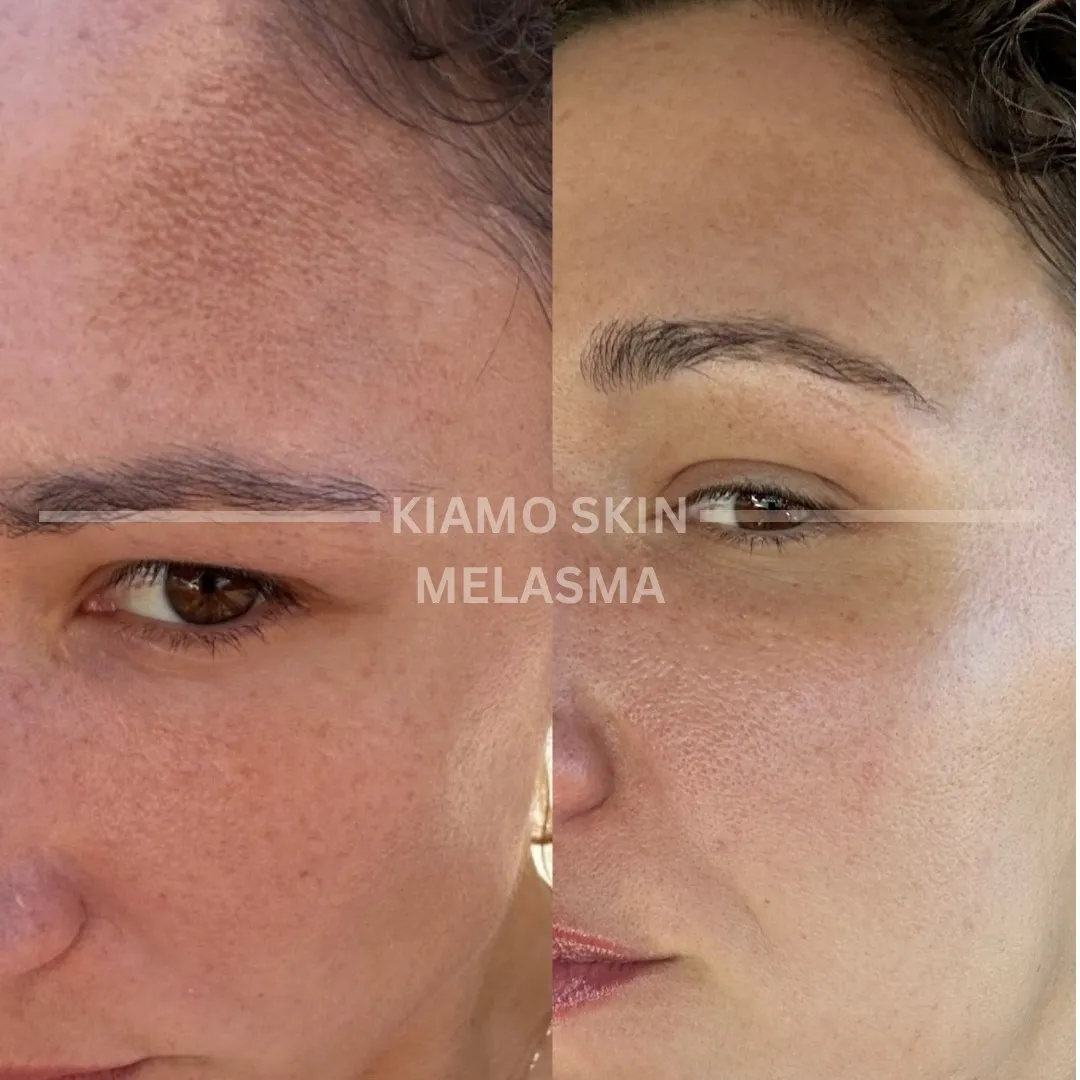
Melasma · chemical peel
Melasma treated across a Lira Chemical Peel series.
Melasma is the most-searched skin concern at this studio, and the case is also the clearest demonstration of how a Lira series works in practice. Depth of pigment, skin tone, sun exposure, and home routine all decided the work — the result is one possible outcome, not a guaranteed one.
The series ran over four months with a daily tinted SPF carrying iron oxide between visits. The home routine did as much of the work as the in-room treatment — that is the case almost every time.
- 4
- Over 4 months
Post-inflammatory hyperpigmentation
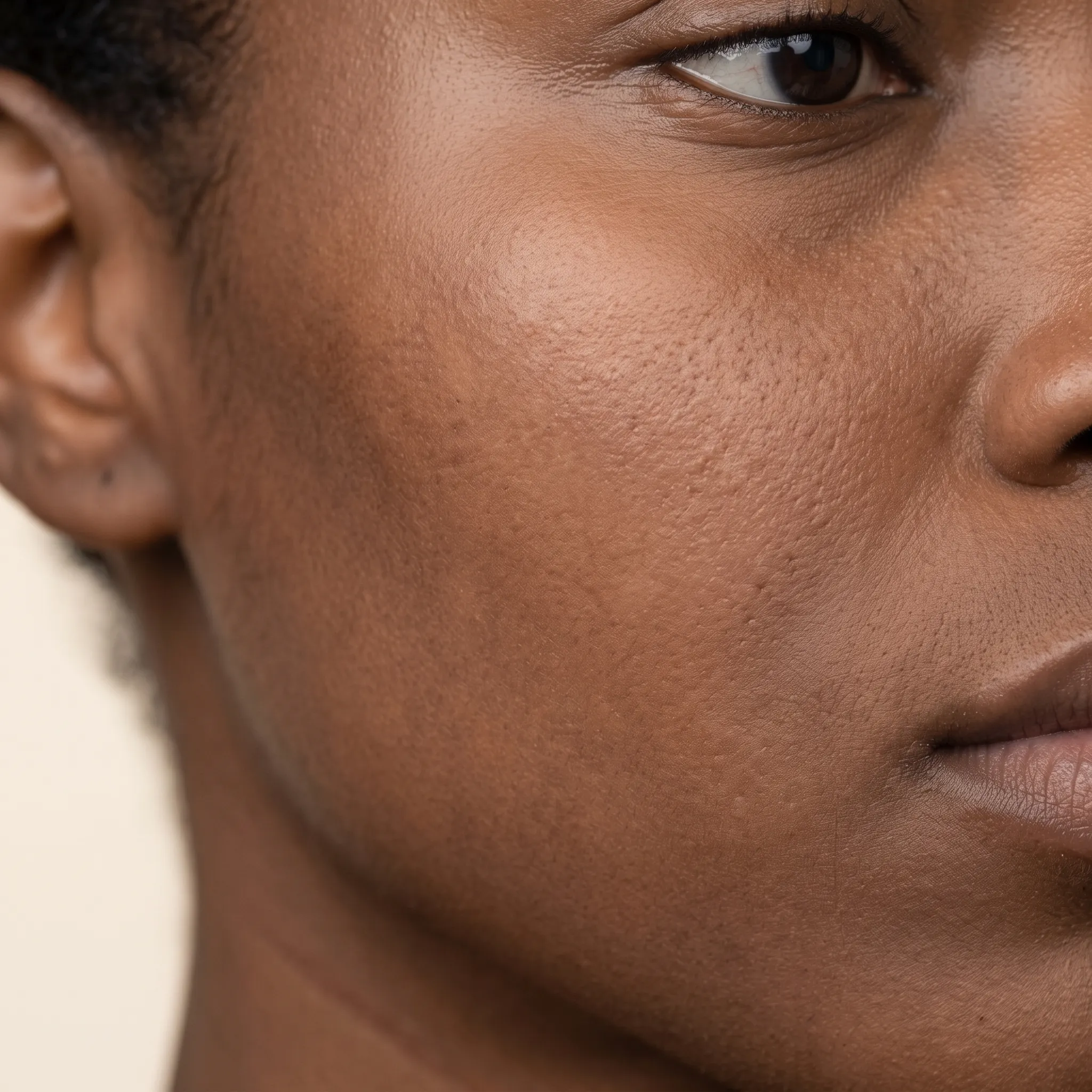
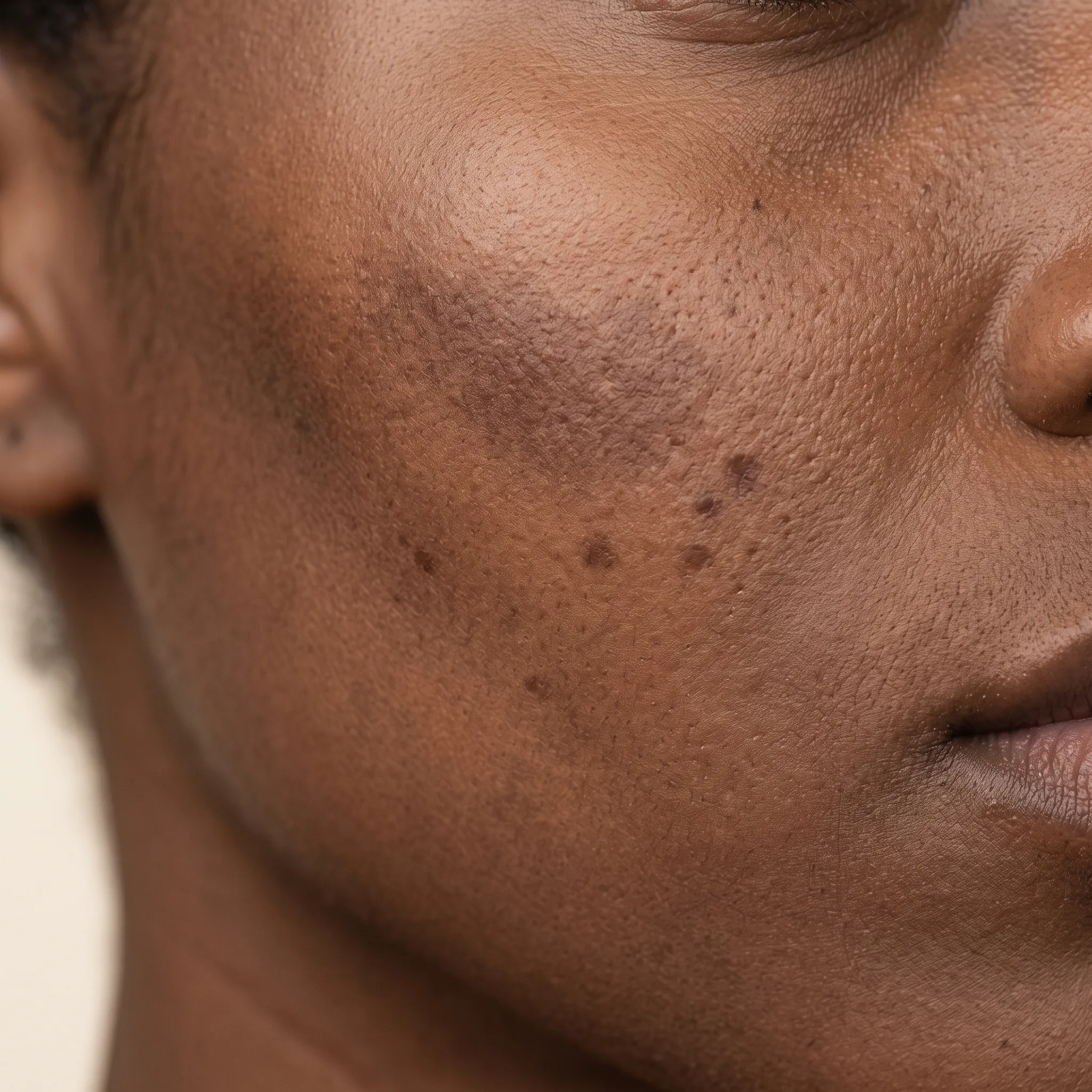
Four Lira Chemical Peels across five months on melanin-rich skin.
Dark marks from acne and shaving that had been raised over years. The plan escalated the peel strength only as the barrier was ready. Daily tinted SPF with iron oxide between visits did as much work as the in-room treatment.
The home-care routine carried the result between visits. Post-peal SPF and a pigment-inhibiting serum were not optional — they were the protocol.
- 4
- Over 5 months
Pigmentation · back
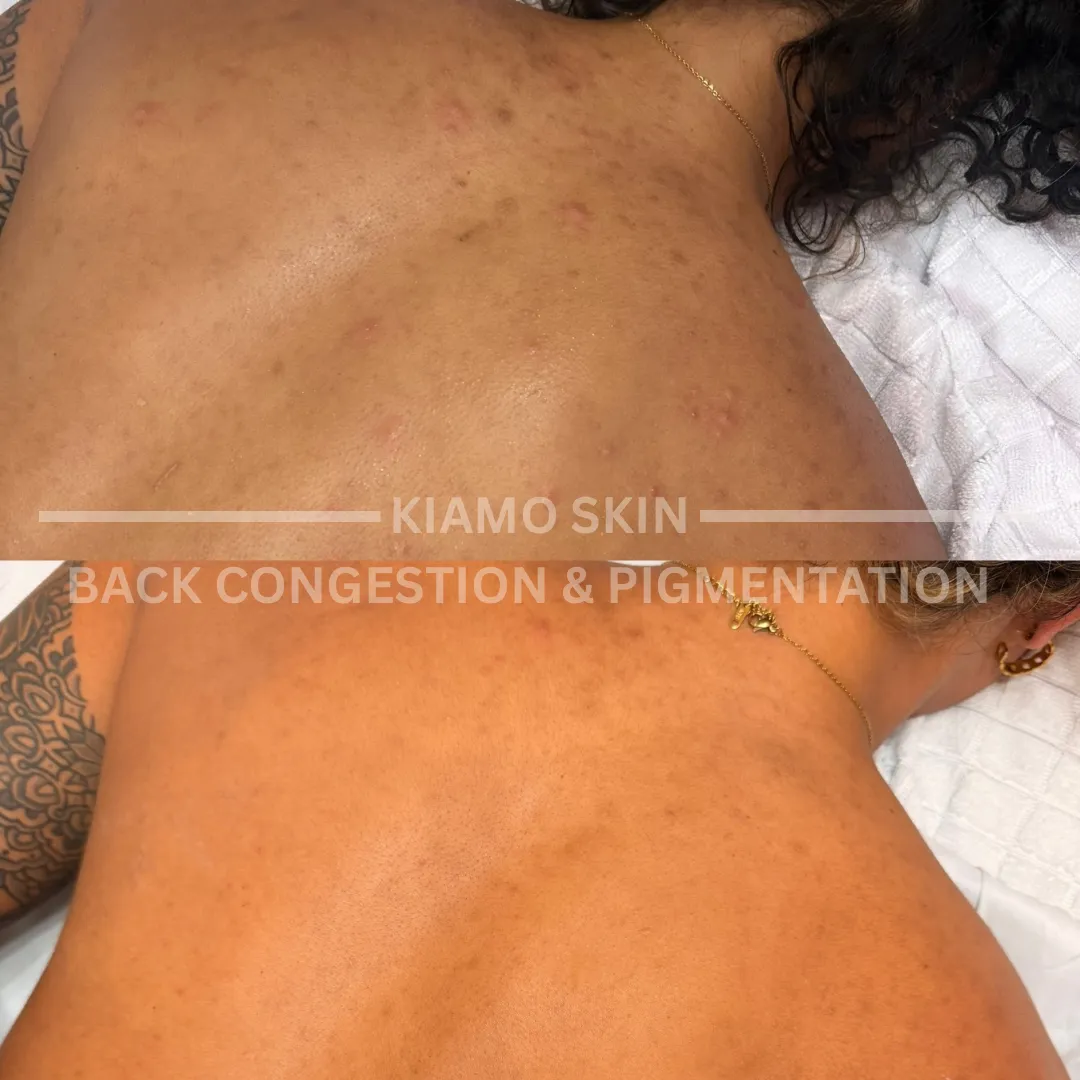
Back congestion and pigmentation after Procell Microchanneling.
Back congestion and post-inflammatory pigmentation, often left untreated through a long San Diego summer. Procell works mechanically with no RF heat, which matters on the body where melanin responds to thermal trauma with more pigmentation of its own.
Three sessions, four to six weeks apart. LED light therapy after each pass. Numbing cream applied before.
- 3
- Over 4 months
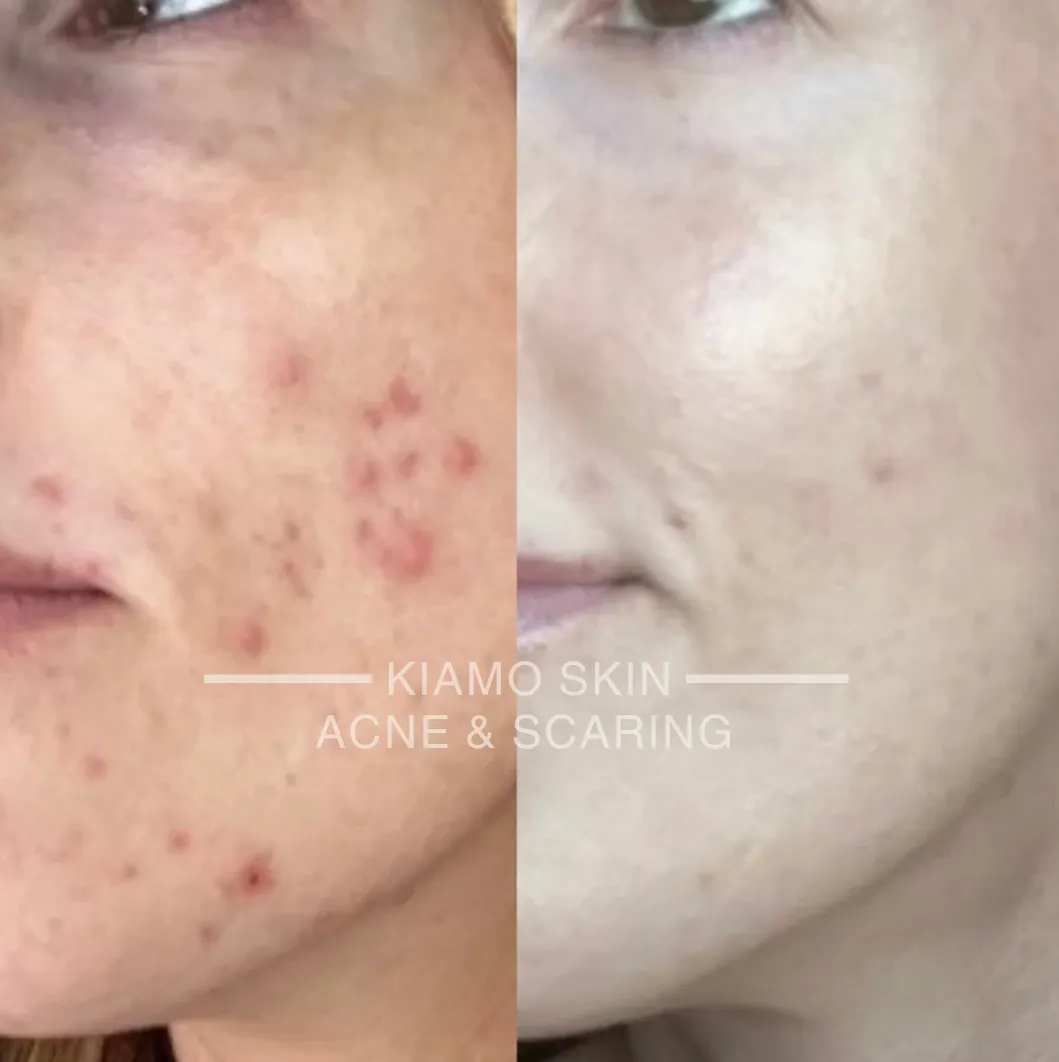
Acne scarring
Acne scarring softened across a Procell series.
Atrophic scarring, the kind that lingers long after the breakouts have closed. Procell creates mechanical channels without RF heat, then the studio applies stem cytokine growth factor serums into the open channels. Result over three sessions, in the same room, on the same client.
Acne scars often need six months of patient work. Three sessions is the floor, not the typical course.
- 3
- Over 4 months
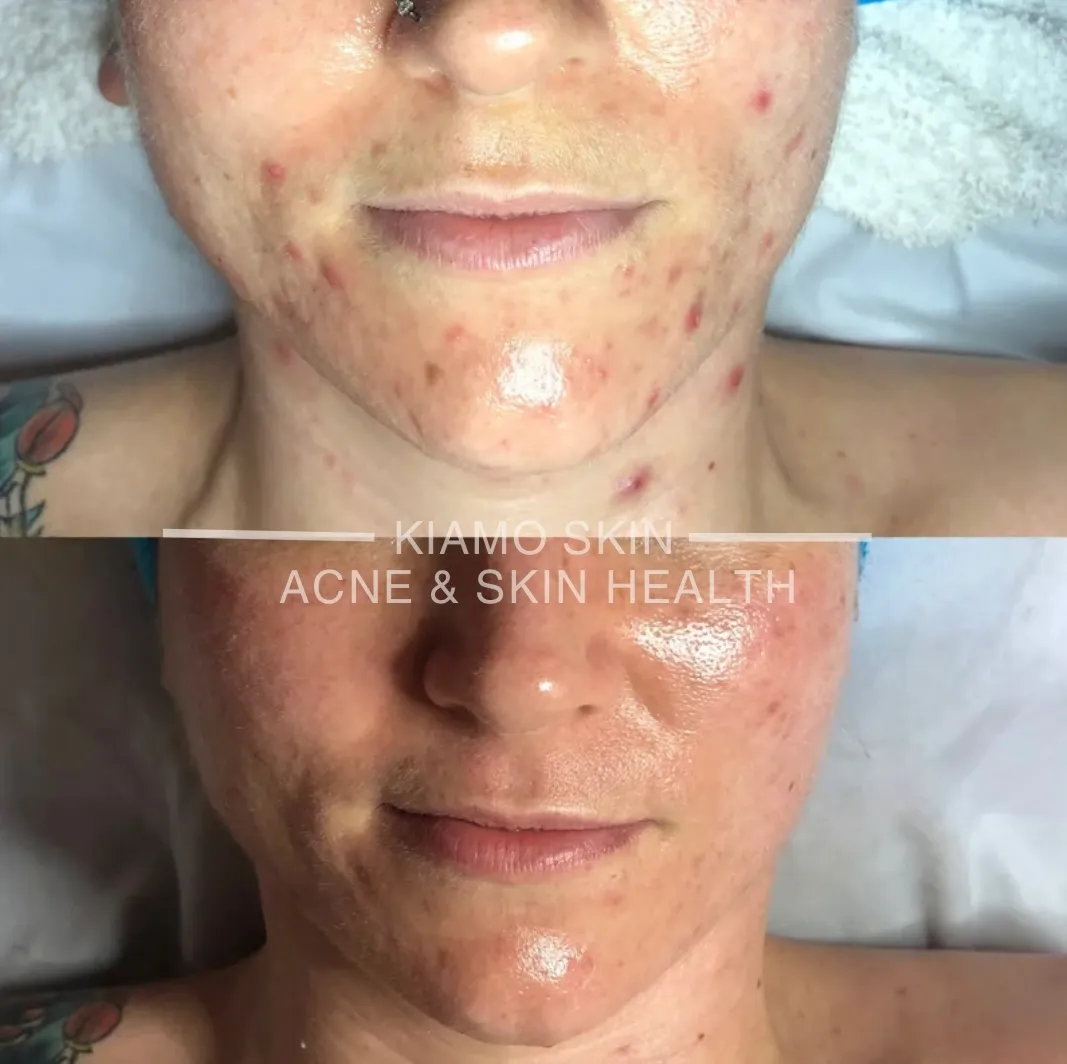
Acne · skin health
Acne and skin health after corrective treatment.
Active cystic acne across the chin, jawline, and cheeks. The case cleared across a course that combined extractions, enzyme therapy to rebuild the compromised barrier that was allowing the inflammation to keep returning, and a paced home-care routine.
For severe or persistent acne, the studio works alongside a dermatologist rather than replacing one. Severe acne is a medical condition; estheticians and dermatologists treat it differently, and both roles matter.
- 6
- Over 5 months
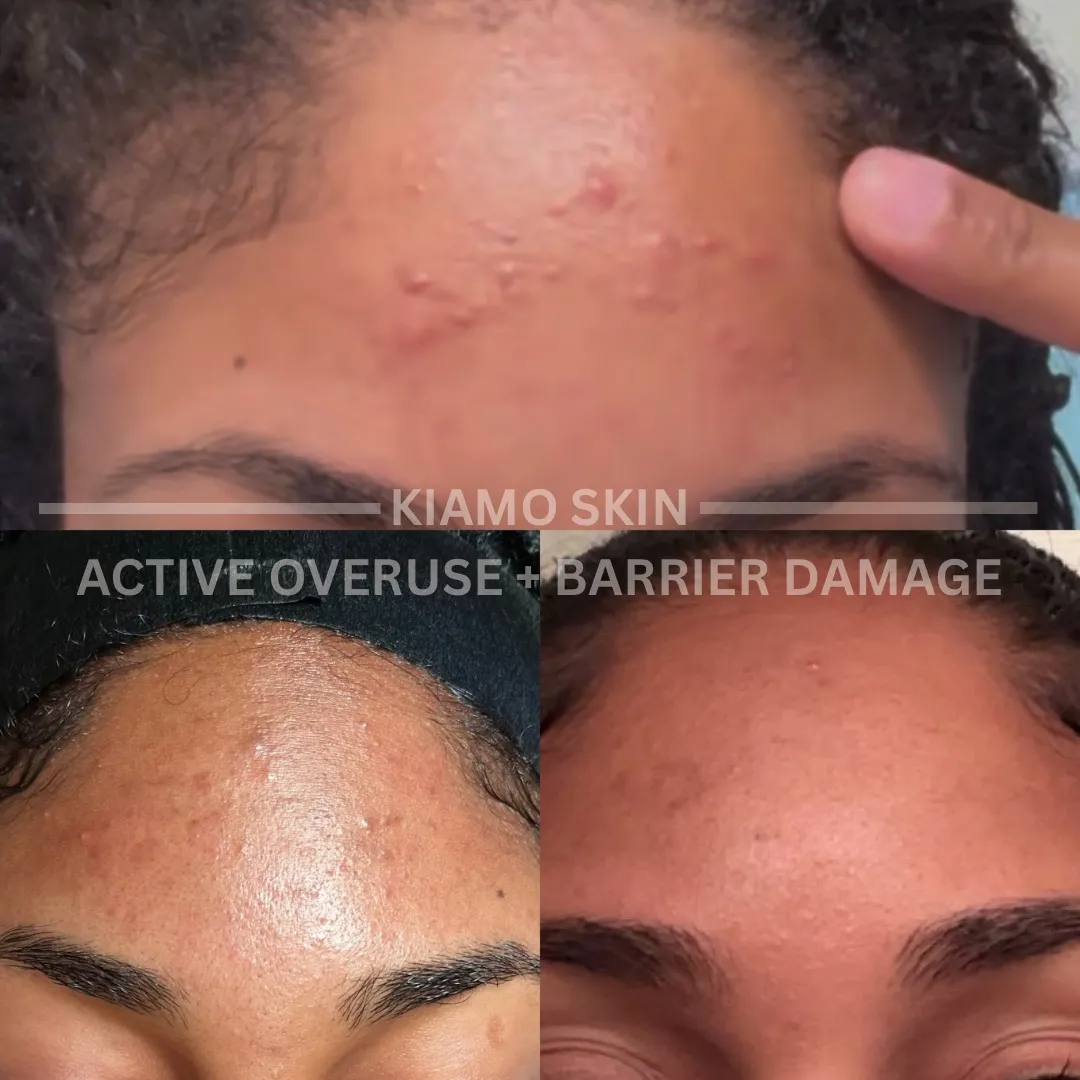
Barrier repair · active overuse
Barrier repair after active product overuse.
A barrier damaged by aggressive at-home products — over-exfoliation, multiple actives layered, the cumulative pattern the studio sees most often. DMK Enzyme Therapy rebuilt the barrier before any corrective work began, with the home routine pared back to a cleanser and SPF for the duration of the case.
Treating pigmentation on a damaged barrier is how marks get worse, not better. Barrier work is the foundation, not the bonus.
- 4
- Over 3 months
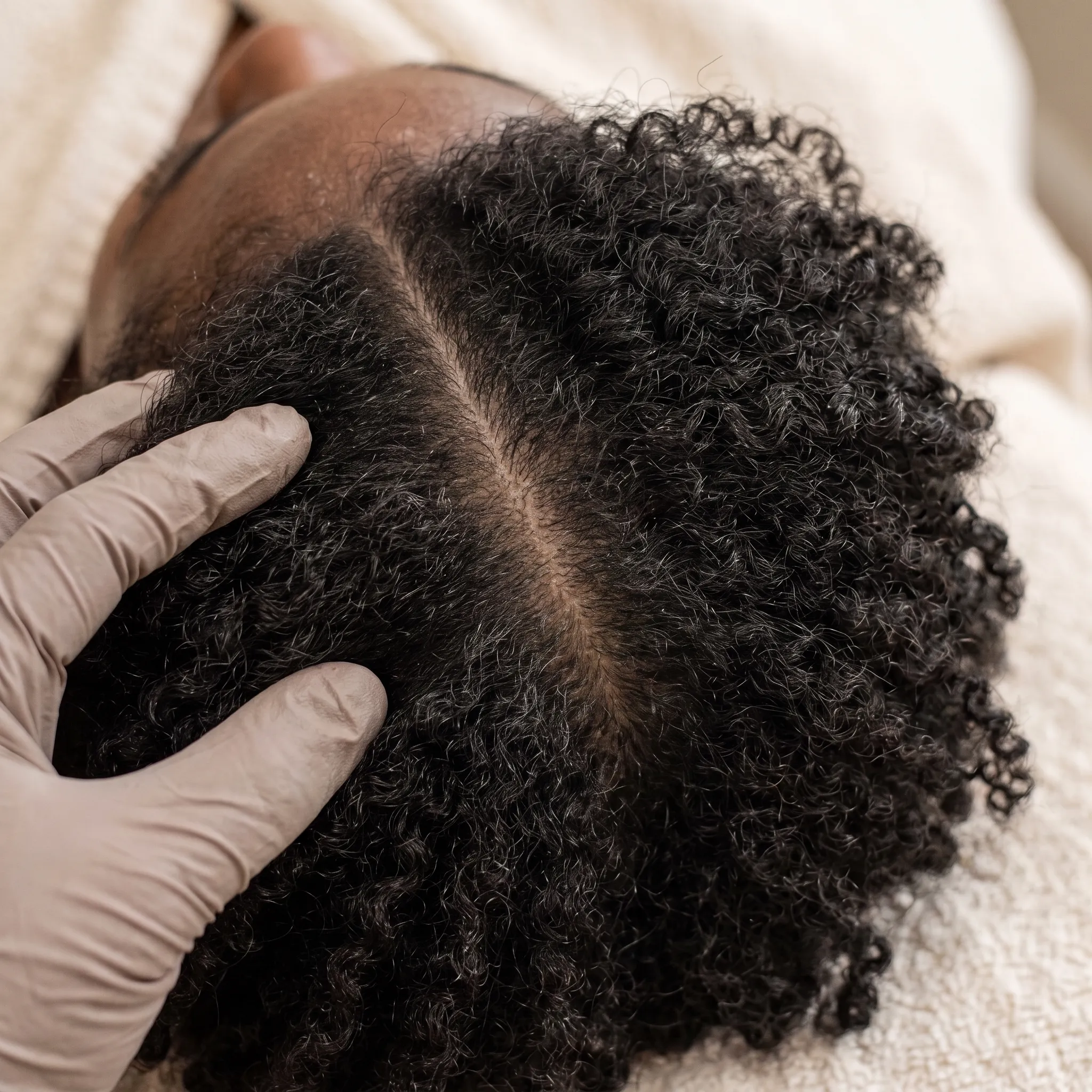
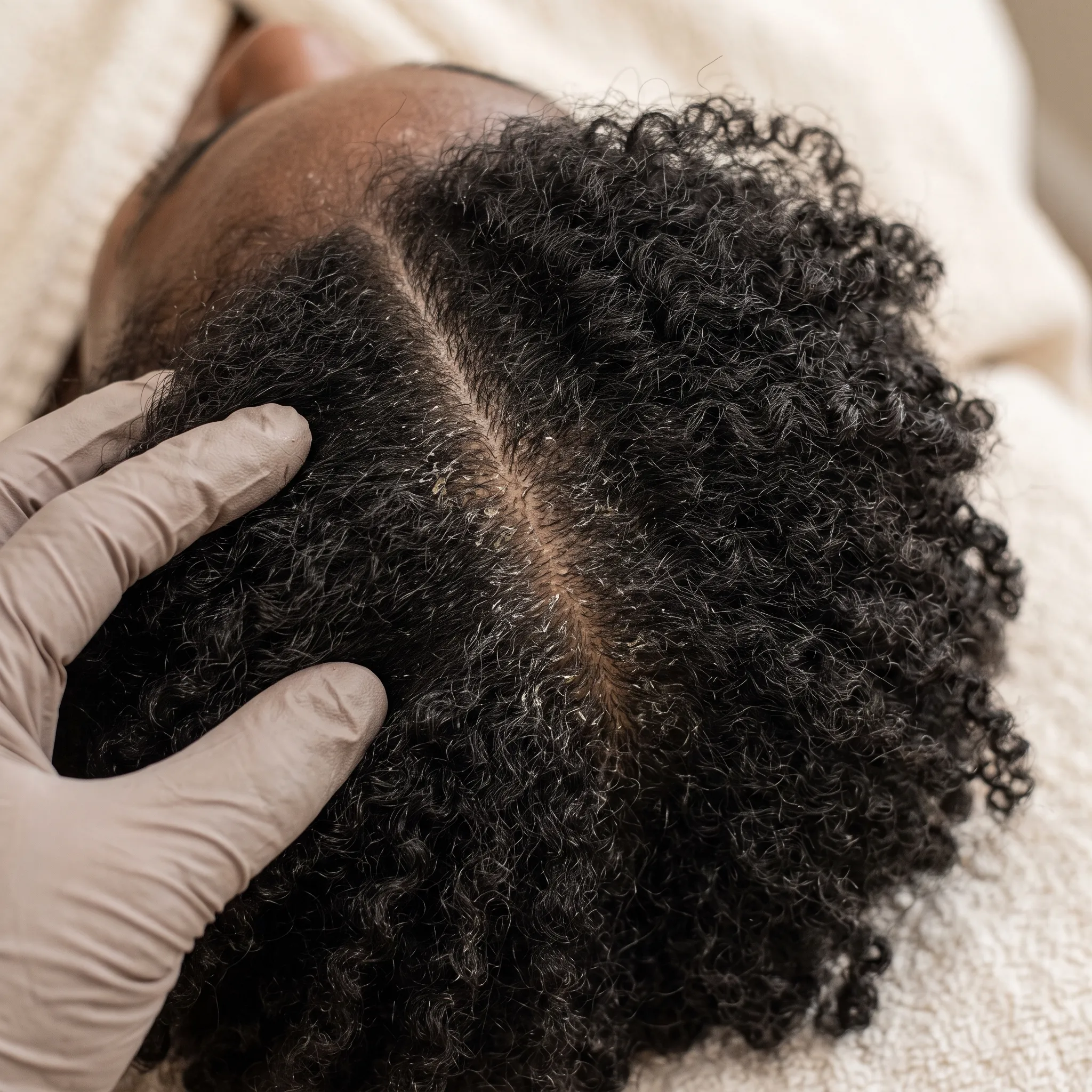
Scalp · buildup & flaking
Keravive scalp therapy across three sessions.
San Diego hard water — averaging 280–320 ppm calcium and magnesium — leaves a mineral film on the scalp that ordinary shampoo cannot remove. Keravive vortex extraction lifted it, then the peptide complex nourished the skin underneath. Three sessions three months apart, take-home peptide spray between each one.
A standard clarifying shampoo removes oil, not mineral deposit. Keravive extracts the mineral film at 30–70 mmHg controlled suction and feeds the peptide complex into the scalp in the same visit.
- 3
- Over 4 months
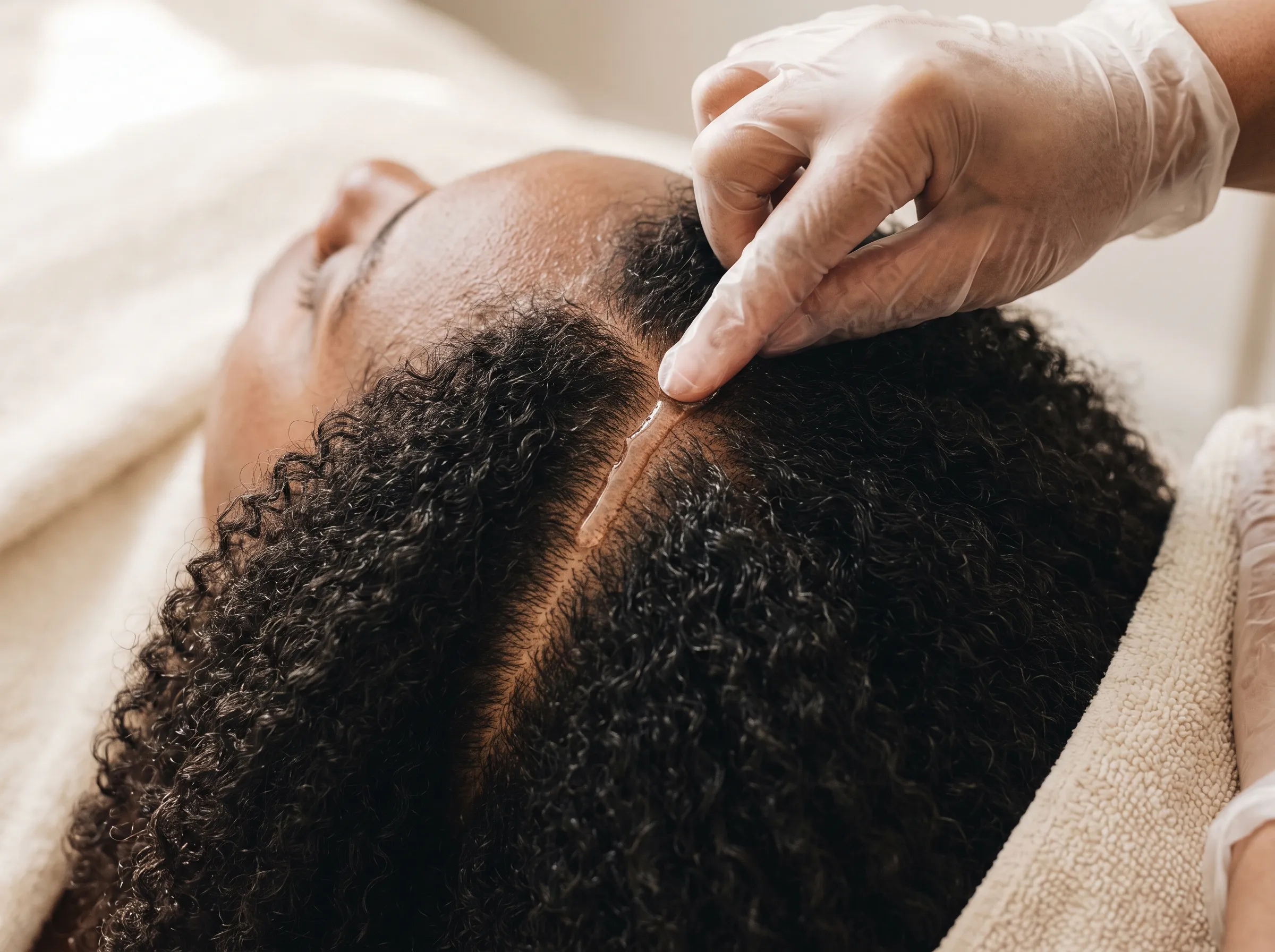
Hair-thinning support
Keravive series supporting hair-thinning concerns.
Keravive was originally developed as a scalp-health protocol with hair-thinning support as a secondary outcome. The peptide complex nourishes sebaceous glands and supports the environment for healthy growth. The photo here is taken at the end of a six-month protocol with the home-care routine.
After-only image: the change is too subtle for a side-by-side comparison to read. The home-care protocol is the difference.
- 3
- Over 6 months
No cases match this filter yet — try another concern.
Behind the cases
The hands on every photo.
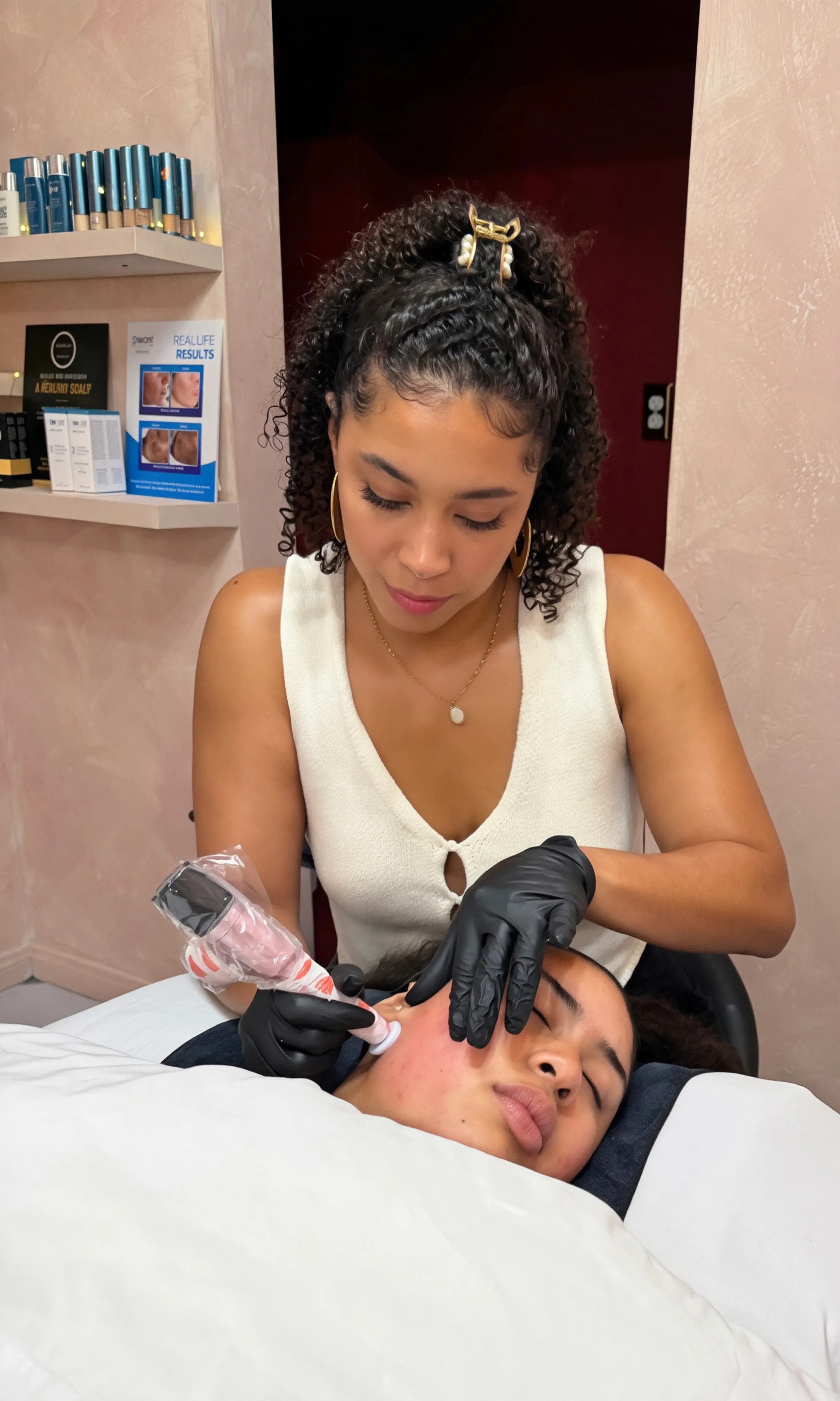
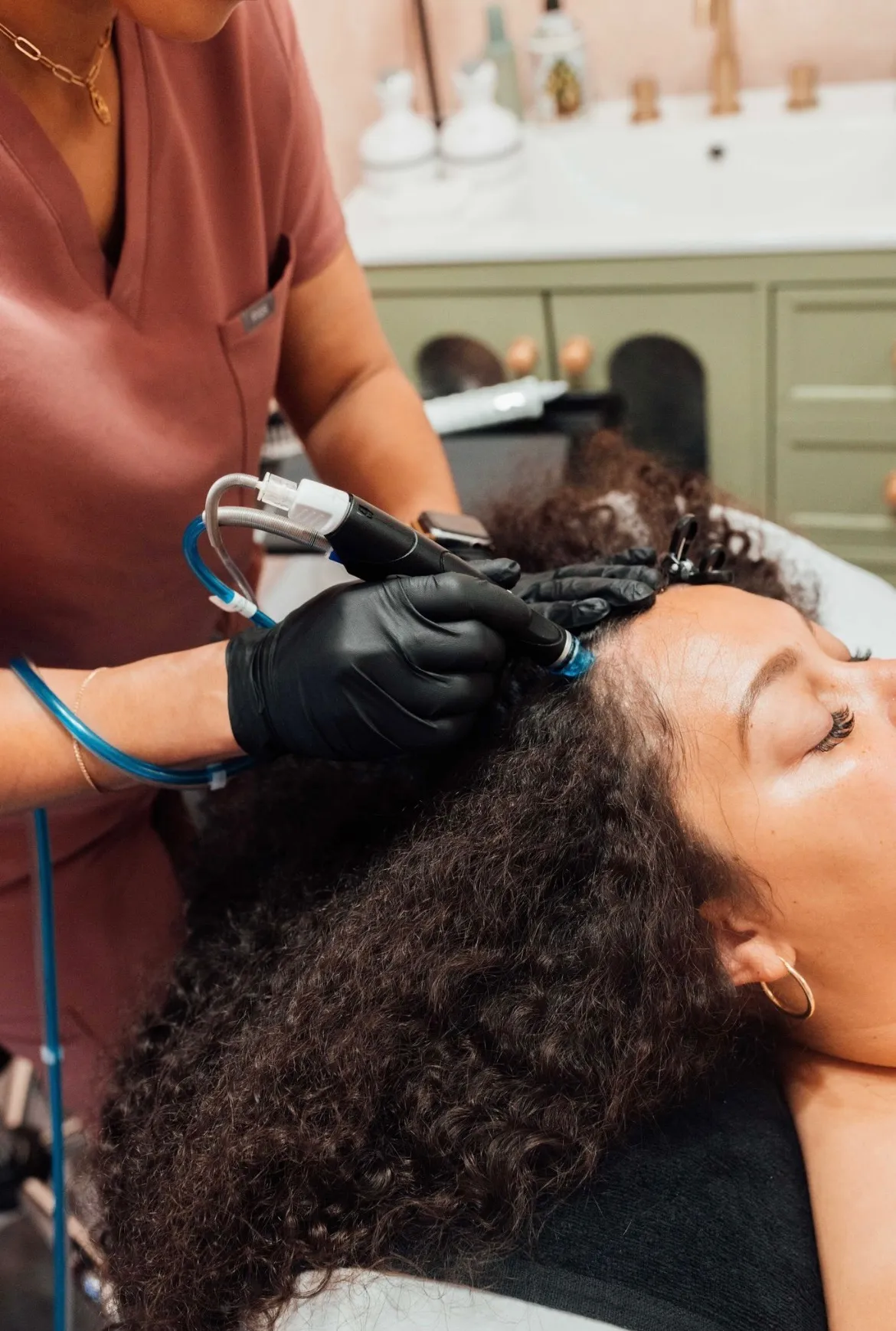
Every case on this page was performed by Kiki — a California-licensed esthetician with seven years of treatment in the studio and zero rotating staff. The photos are not curated to a model; the same person does every consultation, every treatment, and every after photo in the room.
One client at a time, in a single private treatment room at 3067 Reynard Way. The room on the page is the same room the cases were photographed in.
Read more about Kiki
How the gallery is made
The rules under which a photo is published.
Same room, same LED, same phone. Every photograph on this page was taken in the same studio room on 3067 Reynard Way under the same overhead LED, with the practitioner's phone. There is no second rig and there is no glamour light. Crops do differ between cases because phone orientations differ — that's not a lighting choice, just the operator's reach.
No retouching, no staging. Photos are not softened, brightened, or airbrushed. The skin in the after photo is the skin on the day, with whatever warmth shift the season brought.
A paired photo only when the change is large enough to read. Some concerns produce changes too subtle for a paired comparison — texture refinement on Procell at series end, hair-thinning support on Keravive. For those we publish only the after, with a case note explaining why.
Each case names four facts. The treatment performed. The concern being addressed. The number of sessions completed. The elapsed time across the case. Anything else — name, exact date, cost — stays out of the public gallery.
Fitzpatrick band, not skin tone. Photographs don't carry named skin tones honestly. Each case names a Fitzpatrick band — I–II, III–IV, V–VI — which is the most a case photo can say about its subject without inventing a label.
A case publishes when the client is ready. Consent is revocable. If a client decides later that they don't want their photo on the site, the photo comes down. Nothing about a paired case tells you it would still be there tomorrow.
Why your case may move differently
What determines your result.
Five things decide the speed of a result, and only the first two are about the treatment.
- The depth of pigment or scarring — surface pigment clears fastest, deeper pigment can take a year or more.
- How long the condition has been there — long-standing pigment responds slower than recent.
- What triggered it — UV-driven pigmentation responds differently than hormonal melasma.
- Barrier condition at the consultation — a damaged barrier is rebuilt before any corrective work begins.
- The home-care routine between visits — what you do at home is doing as much work as what happens on the table.
None of these will be true of a new client in the same combination. The after photo on this page shows what was possible for that person in that time. Your plan will be written from your skin on the day.
Before you read the cases
Gallery questions
Did the clients in these photos consent to being shown?
Have these photos been edited, filtered, or shot under special lighting?
Why is each case different — same studio, same concern, different number of sessions?
If I do the same treatment plan, will I look like the after photo?
Why are some concerns missing a paired before and after photo?
The next step
Bring the gallery to your own skin.
The first visit at KIAMO Skin is a consultation, not a fixed protocol. The cases on this page show what the studio has done; the consultation decides what your skin actually needs now, and the plan follows from that.