Areas we serve · Pacific Beach
Sun Damage & Barrier Repair Facials for Pacific Beach Clients
Looking for a facial in Pacific Beach? KIAMO SKIN is a one-room corrective studio in Mission Hills, about fifteen minutes east, and sun damage is the most common reason Pacific Beach clients book. Clients travel from the boardwalk area, Crown Point, Sail Bay, Mission Beach and the residential blocks around Kate Sessions Park. Every appointment is one-to-one with Kiki, a licensed esthetician, by appointment only.
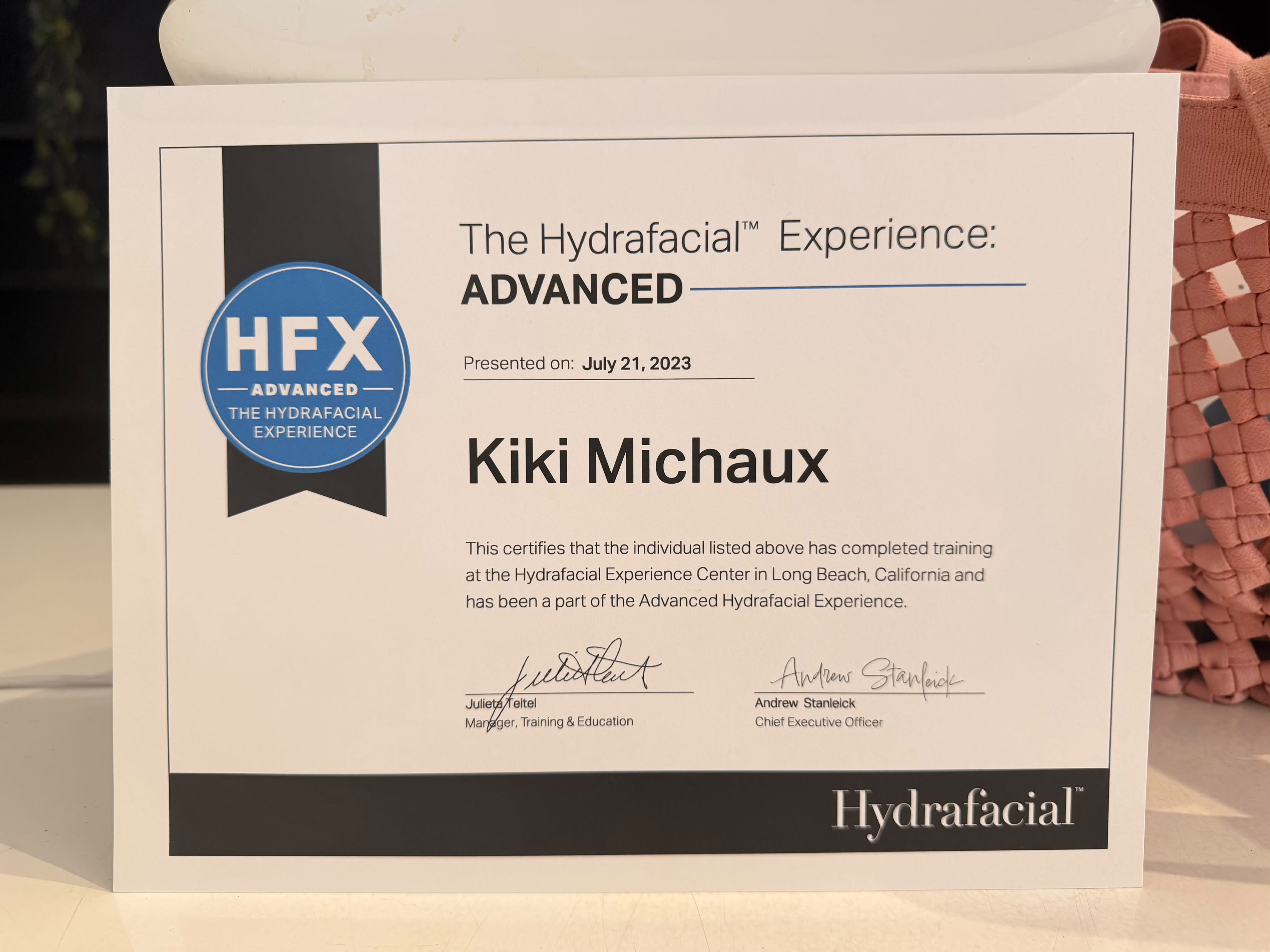
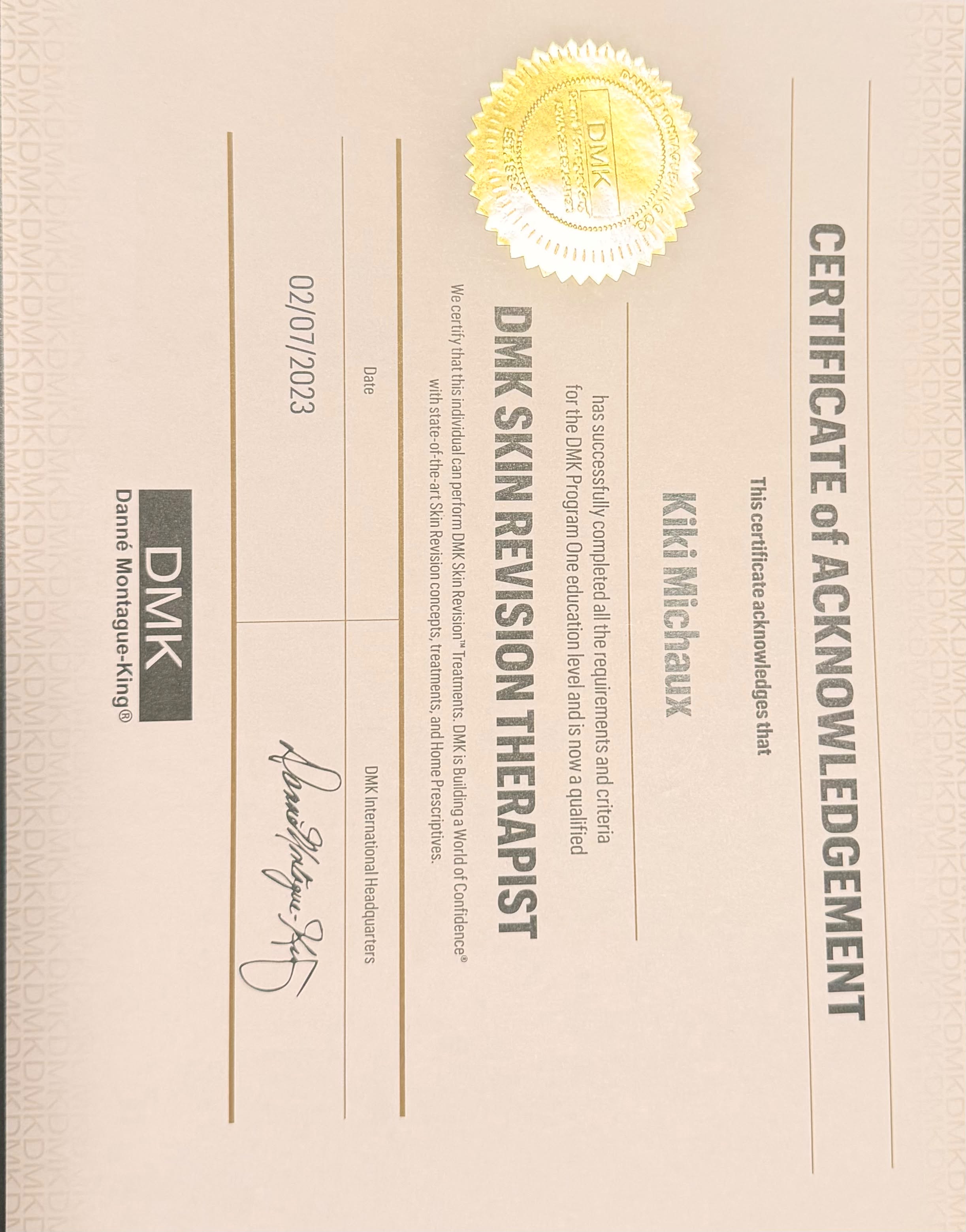
Advanced certifications — click to view:
Roughly seven miles — about fifteen minutes east
Quick Answer
KIAMO SKIN treats sun damage and barrier damage from year-round outdoor exposure at a one-room studio in Mission Hills, San Diego (92103), about 15 minutes east of Pacific Beach via Garnet Avenue and I-5. Kiki, a California licensed esthetician with 7+ years specializing in melanin-rich skin, uses Lira Chemical Peels for UVA-induced pigmentation, DMK Enzyme Therapy for salt-stripped barriers, and Keravive scalp therapy for clients from Crystal Pier, Crown Point, Sail Bay, and the Mission Bay boardwalk. Treatments start at $199, with series planning for May Gray and June Gloom damage that accumulates without visible burns.
Why does sun damage build here without a visible burn?
The Pacific Beach boardwalk runs more than three miles from Law Street down to Mission Bay, and this neighborhood lives outdoors year-round — Crystal Pier, Tourmaline Surf Park, the bay kayak launch at Crown Point and the Fanuel Park stretch of Sail Bay all see daily use regardless of season. The damage accumulates through May Gray and June Gloom, when the marine layer sits over the coast all morning and burns off by early afternoon without ever lowering the UV underneath it. UVA penetrates cloud cover and fog; it is the wavelength that drives pigmentation and collagen breakdown, and it is exactly what gets skipped when the sky looks gray and people leave SPF off. Salt water and wind compound that by stripping the skin barrier on the same mornings the UV is quietly accumulating. What shows up is uneven tone, texture and a scalp that is drier and flakier than it should be — not a burn, and not traceable to any single afternoon. A Lira peel addresses the pigmentation across a series, DMK Enzyme Therapy rebuilds the barrier beneath it, and Keravive scalp therapy does the same for the scalp, where the part line receives the same UVA with nothing protecting it.
What makes this different from spa facials
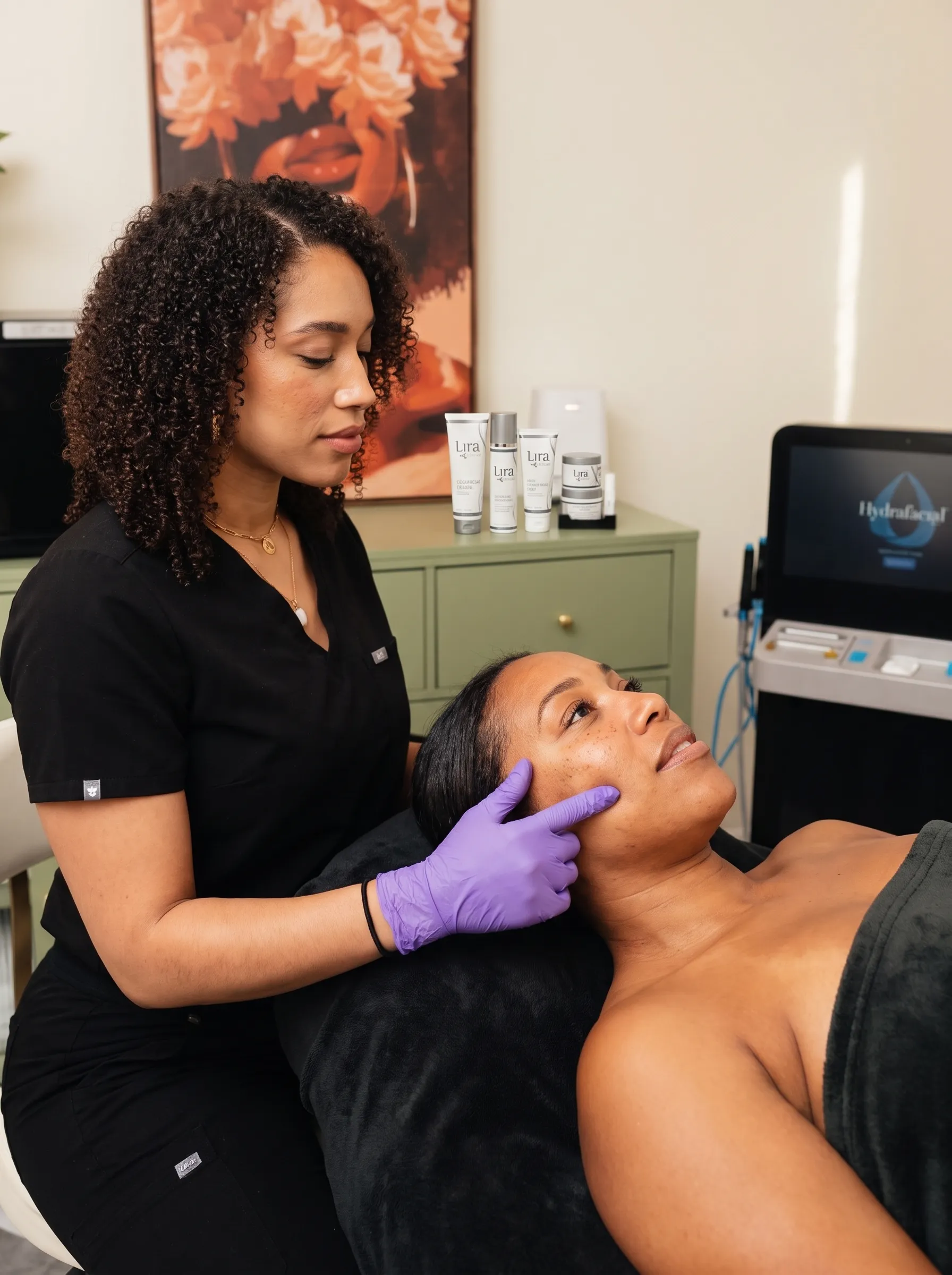
Clinical-grade equipment — HydraFacial Syndeo with medical-grade vacuum calibration and peptide infusion under pressure, not manual extraction with steam
Melanin-rich skin specialization — treatment strength, pacing, and product selection based on Fitzpatrick type and barrier condition, not a universal protocol
Series planning at consultation — full course mapped and scheduled at the first appointment, with treatment intervals set by recovery time, not convenience
One practitioner, one room — same esthetician assesses, treats, and adjusts the plan at every visit based on how your skin responded
Services for Pacific Beach clients
Lira chemical peels start at $199. DMK Enzyme Therapy Level 1 is $279. HydraFacial is $259. Full pricing is on each treatment page.
How treatments work
How Lira Peels treat May Gray sun damage without triggering PIH
Lira Clinical peels are formulated specifically for melanin-rich skin (Fitzpatrick types III-VI) with controlled-release acid delivery that addresses UVA-induced pigmentation without the aggressive exfoliation that triggers post-inflammatory hyperpigmentation. The peel system uses a combination of lactic acid (gentle, hydrating), mandelic acid (large molecule, doesn't penetrate as deeply), and kojic acid (tyrosinase inhibitor) to lighten existing pigmentation while preventing new melanocyte activation during the healing window.
- 1
Pre-treatment barrier stabilization (2 weeks)
Home prep with Lira Clinical ICE serum (peptides, niacinamide, tranexamic acid) to stabilize the skin barrier and reduce melanocyte reactivity before the first peel — skipping this step on melanin-rich skin is what causes PIH
- 2
Controlled-release peel application
Lira peel solution applied in thin layers with 2-3 minute intervals between coats — not dumped on all at once like traditional glycolic peels. Total contact time: 8-12 minutes depending on Fitzpatrick type, barrier condition, and response to previous peels in the series
- 3
Neutralization and inflammation control
Peel neutralized with alkaline solution when target frosting appears, then cooling masque applied immediately to suppress inflammation and prevent the melanocyte overreaction that causes rebound pigmentation (10 minutes)
- 4
Post-peel tyrosinase inhibitor protocol
Strict sun avoidance for 7 days (indoor only during healing window), mineral SPF 50+ applied every 90 minutes after day 3, and Lira ICE serum twice daily to inhibit tyrosinase enzyme activity — this is what prevents your pigmentation from coming back darker
- 5
Home care compliance verification
Next peel not scheduled until you've completed the full post-peel protocol and the barrier has fully recovered — rushing the series is what causes PIH, not the peel itself
Total treatment time: 45-60 minutes | Downtime: Mild flaking days 3-5 | Series: 4-6 peels, 14-21 days apart | Zero sun exposure for 7 days post-peel | Not suitable during summer beach season — schedule for fall/winter/early spring
How DMK rebuilds barriers stripped by salt water and wind
DMK Enzyme Therapy works with the skin's plasmatic system (the circulatory network that delivers oxygen and nutrients to cells) rather than chemically exfoliating the surface. The enzyme masque creates a tightening effect that drives fresh oxygenated blood to the dermis, forcing the skin to function and rebuild the lipid barrier that salt water and wind strip away with each beach day. This is the treatment for Pacific Beach clients whose skin has become tight, reactive, and stinging under products it used to tolerate.
- 1
Deep cleanse without stripping
DMK Pre-Cleanse (oil-based) and Beta Gel (lactic acid-based) remove salt residue, mineral deposits, and oxidized sebum without the foaming surfactants that further compromise an already-damaged barrier (5 minutes)
- 2
Enzyme masque application
Thick enzyme formulation applied to face, neck, and décolletage in upward strokes. As it dries over 10-15 minutes, the masque creates a pumping/pulsing sensation — that's the plasmatic response driving oxygenated blood to the surface and forcing lymphatic drainage of metabolic waste (45 minutes total contact time)
- 3
Plasmatic response peak
At peak effect (around 35-40 minutes), your face will feel tight and you'll see visible pulsing — this is not a chemical burn, it's reverse osmosis pulling fluid into the dermis and forcing capillary dilation. The stronger the pulse, the more compromised your barrier was before treatment
- 4
Masque removal and transdermal serum infusion
Masque removed with cool water and sponges, then DMK transdermal serums applied while pores are maximally receptive. For salt-stripped barriers: Essential Fatty Acids (EFA), Beta Gel (lactic acid + niacinamide), Herb & Mineral Spray (zinc, magnesium, botanical anti-inflammatories) to rebuild the lipid matrix (10 minutes)
- 5
Home prescriptives (mandatory, not optional)
DMK home care products prescribed based on your specific barrier damage pattern — Cleanser, Beta Gel, EFA, Herb & Mineral Spray used daily between sessions. The in-clinic enzyme treatment is designed to work WITH daily home support, not as a standalone monthly facial
Total treatment time: 70-80 minutes | Downtime: Tightness for 12-24 hours, possible mild redness | Series: 4-6 sessions, 10-14 days apart | Avoid ocean swimming 48 hours post-treatment | Expect visible skin shedding days 3-5 (this is normal barrier turnover, not damage)
How Keravive clears scalp buildup from boardwalk UV exposure
Keravive is a three-step clinical scalp treatment using HydraFacial's vortex extraction technology adapted for the scalp. It addresses the follicle-level buildup that Pacific Beach lifestyles create: salt crystals from ocean exposure, mineral deposits from San Diego's hard water (280-350 mg/L total dissolved solids), oxidized sebum from UV exposure along the part line, and the residue from daily shampooing that never fully rinses clear when your water is this hard. The part line receives as much cumulative UV as your cheeks — often more, because people don't think to apply SPF to their scalp until the sunburn already happened.
- 1
Vortex exfoliation and extraction
HydraFacial Keravive handpiece with spiral tip uses calibrated vacuum suction to remove salt crystals, mineral deposits, and oxidized sebum directly from the follicle opening — not scrubbing the surface with physical beads that scratch the scalp skin (10 minutes of continuous extraction across all scalp zones)
- 2
Growth factor peptide infusion
Biomimetic peptide complex (copper peptides, oligopeptides, biotin) with niacinamide and caffeine delivered under pressure into the scalp dermis at the follicle level to stimulate microcirculation, support keratinocyte function, and hydrate the scalp barrier (5 minutes)
- 3
Take-home daily serum (included)
30-day supply of Keravive scalp serum (peptides, panthenol, hydrators) applied nightly to maintain the treatment effect between sessions. The serum is not optional — skipping home care between treatments means starting from zero at each visit instead of building cumulative improvement
Total treatment time: 20-25 minutes | Downtime: None — can swim same day if needed | Series: 3 sessions, 30 days apart | Full results visible after completing 3-treatment series | Maintenance: One session every 3-4 months to sustain results
Our commitment to Pacific Beach clients
Consultation-first approach
Every new client receives a full skin analysis before any treatment is booked. No surprises, no upselling mid-session. What you see in the consultation is what happens in the treatment room.
Series planning upfront
If your concern requires multiple visits, we map the full course at the first appointment — number of sessions, treatment intervals, total timeline, and investment. You'll know what to expect before you commit.
Same practitioner guarantee
One treatment room, one licensed esthetician. The person who assessed your skin at the first visit performs every treatment and adjusts the plan based on response.
Transparent pricing
All treatment costs are published and confirmed in writing before booking. No hidden fees, no surprise add-ons, no pressure to upgrade mid-treatment.
Common questions from Pacific Beach clients
How far is Pacific Beach from the studio?
Roughly seven miles, or about fifteen minutes off-peak. From the main Garnet Avenue strip, head east to I-5 south and exit at Washington Street. From Crown Point or Sail Bay, Ingraham Street south to Grand Avenue east is the same distance. Summer weekend traffic on Garnet and Ingraham west of I-5 can add ten to fifteen minutes from mid-morning onward — an earlier appointment clears that.
Can you accumulate sun damage on a gray day in Pacific Beach?
Yes — and it is the more common way damage builds here. May Gray and June Gloom keep the coast overcast every morning, sometimes into early afternoon, without once lowering the UV index underneath. UVA penetrates cloud cover and fog; it is the wavelength responsible for pigmentation and collagen breakdown, and it keeps working whether or not the sky looks sunny. Pacific Beach lives outdoors year-round — the boardwalk, the surf breaks at Tourmaline, the bay launch at Crown Point — and gray mornings are precisely when SPF gets skipped.
What does salt water do to the skin barrier over time?
Repeated salt water exposure strips the lipid barrier — the oils that hold the outermost skin layer together. Salt dissolves those lipids efficiently, and the freshwater rinse afterward removes whatever the ocean left behind but also washes away the barrier it was sitting on. Over time the skin becomes tight and reactive, stinging under products it once tolerated and sensitised to the sun it is also being exposed to. DMK Enzyme Therapy works with the skin's own repair function rather than exfoliating a surface that is already raw — it is the appropriate treatment for that state, not a stronger peel.
What is the difference between a HydraFacial and a chemical peel for sun damage?
A HydraFacial cleanses, extracts and infuses hydration in one visit — it is restorative without removing skin, and it works on a sensitised, UV-damaged barrier without irritating it further. A Lira chemical peel works at a deeper level to address uneven pigmentation and texture over a series of visits. They serve different stages: a HydraFacial supports the barrier and delivers immediate results, while a peel series addresses the accumulated pigment that a HydraFacial alone will not shift. Many Pacific Beach clients do both, using the HydraFacial to maintain the barrier between peel intervals.
Does the June Gloom affect the scalp as well as the face?
Directly. The part line receives UV from above with nothing covering it, and on overcast mornings when SPF is skipped, the scalp accumulates the same UV the face does. Salt water from ocean swimming or surfing compounds it: the part line and hairline take repeated direct sun while the scalp skin dries out under daily rinsing. Keravive scalp therapy addresses both — it clears the buildup at the follicle and rehydrates the scalp skin without any of the abrasion that sensitive skin cannot take.
How long does it take to drive from Pacific Beach to Mission Hills for a facial?
About fifteen minutes off-peak, closer to twenty-five during beach traffic. From Crystal Pier or the Garnet Avenue strip, take Garnet Avenue east to I-5 south (crosses the freeway near Balboa Avenue), then I-5 south to Washington Street (Exit 17) — 7 miles total. Mid-morning (10 AM-12 PM) and early afternoon (1-3 PM) are the fastest windows. During summer weekends and afternoons (late May through September), beach traffic backs up Garnet and Ingraham west of I-5 from noon onward, which can push the drive to thirty minutes or more. If you're coming from Crown Point, Sail Bay, or Mission Beach, add about five minutes to reach Garnet Avenue first. Early morning appointments (8-10 AM) or late afternoon (after 4 PM) avoid the worst of the beach congestion.
Getting here from Pacific Beach
From the main strip near Crystal Pier, Garnet Avenue east runs directly to I-5 south — seven miles, fifteen minutes off-peak. From Crown Point or Sail Bay, take Ingraham Street south to Grand Avenue east to I-5 south. From Mission Beach or Belmont Park, head north on Mission Boulevard to Garnet, then east to I-5. From the residential streets around Kate Sessions Park, Grand Avenue east to I-5 south is the cleanest line. Summer afternoons and weekend beach traffic clog Garnet and Ingraham west of I-5 from late morning onward — an appointment before ten or after three avoids the thickest part of it.
Roughly seven miles — about fifteen minutes east
From the treatment room
“I drove from Pacific Beach every month and it was worth every minute of the commute. My sun damage finally started shifting after years of trying other things.”
Ready to book your consultation?
New clients start with a consultation that includes a full treatment. Book online or call —Within 24 hours on business days.