Areas we serve · La Mesa
Melasma & Sun Damage Treatment for La Mesa Clients
Looking for a facial in La Mesa? KIAMO SKIN treats cumulative sun damage and pigmentation at a one-room studio in Mission Hills, about twenty minutes west on I-8. Clients travel from La Mesa Village, Mt. Helix, Grossmont, Spring Valley and the neighborhoods east of the SR-125 corridor. Every plan is built for how your skin tone actually responds, not to a fixed protocol.
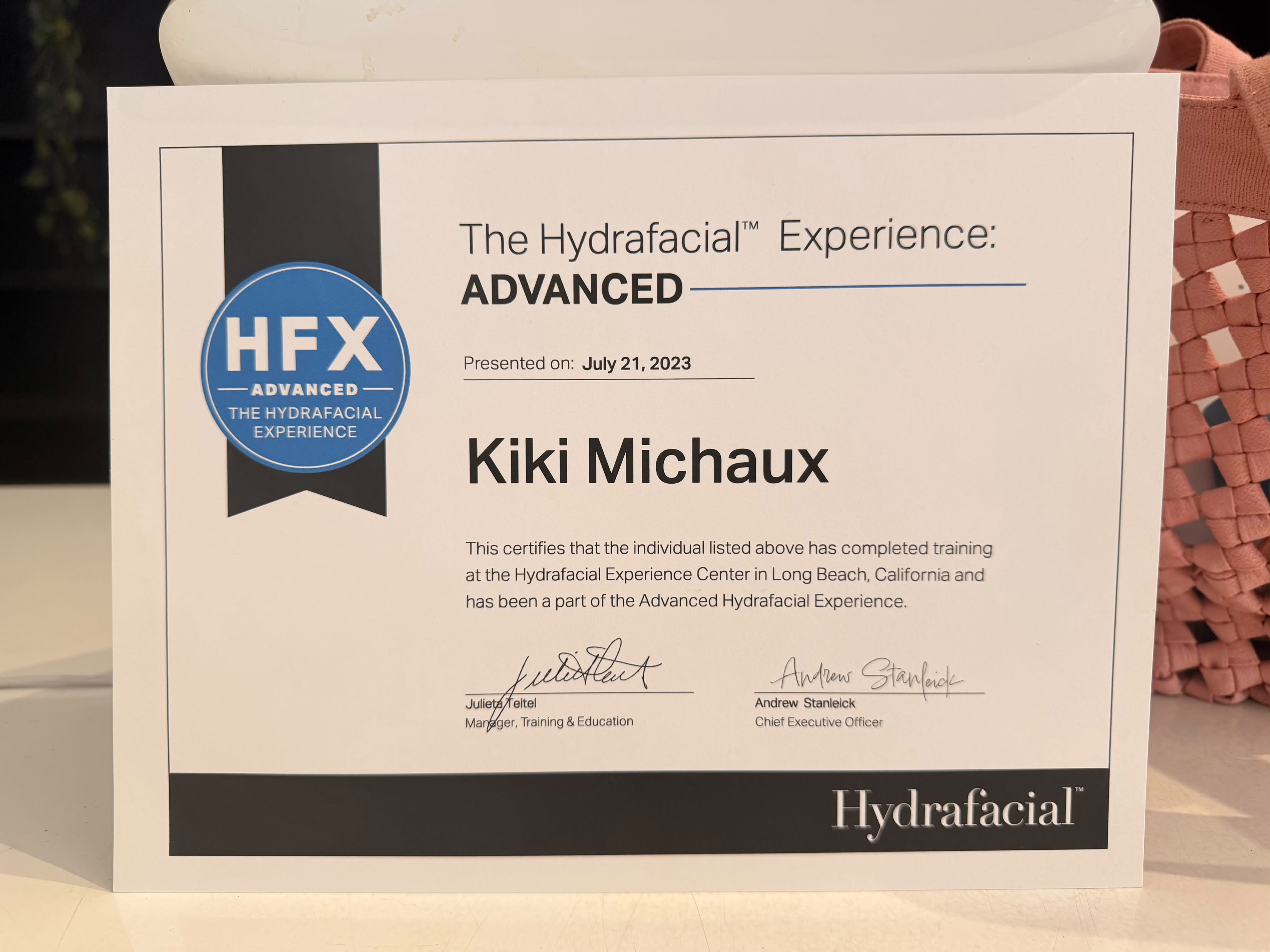
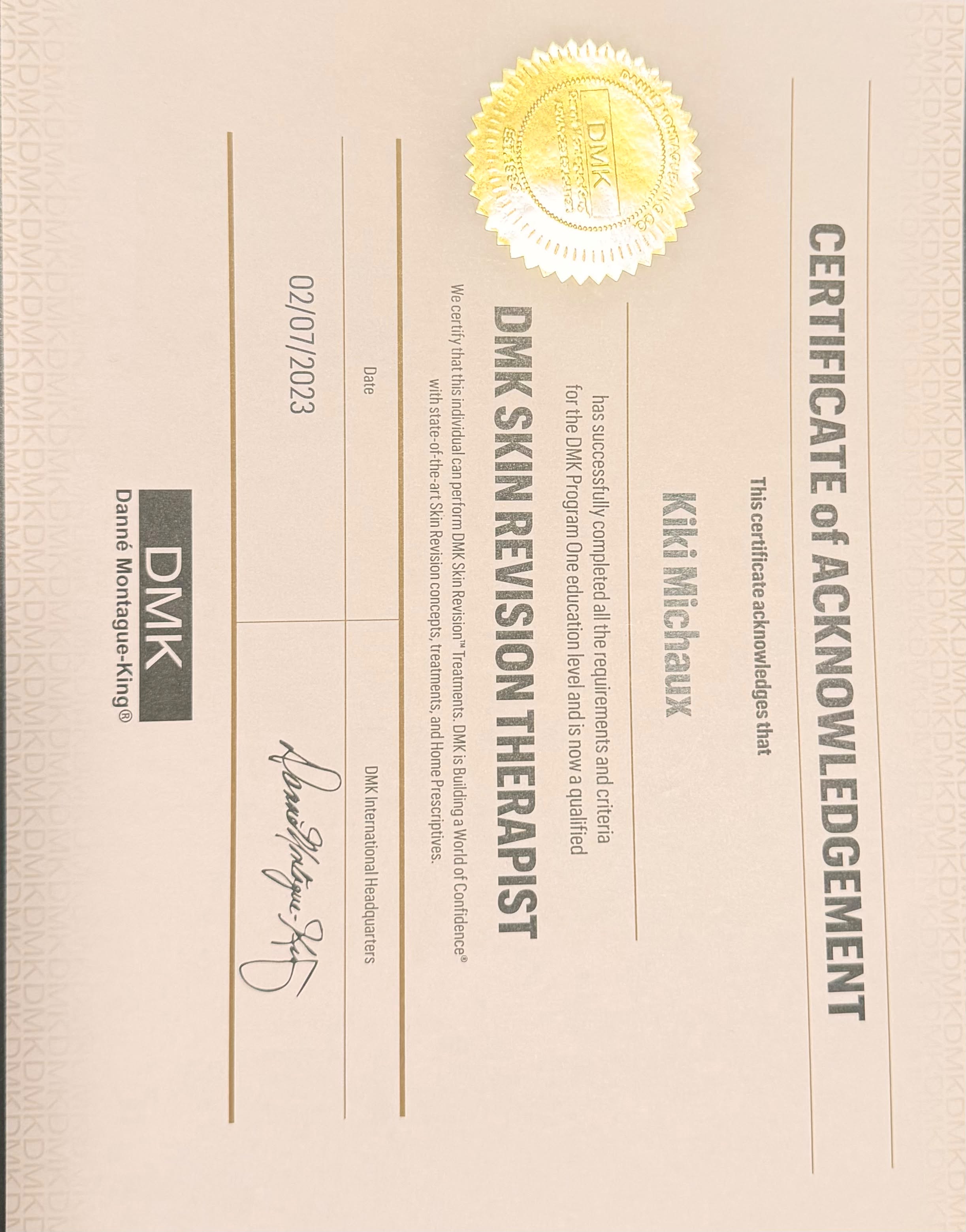
Advanced certifications — click to view:
Roughly eleven miles — fifteen to twenty minutes west on I-8
Quick Answer
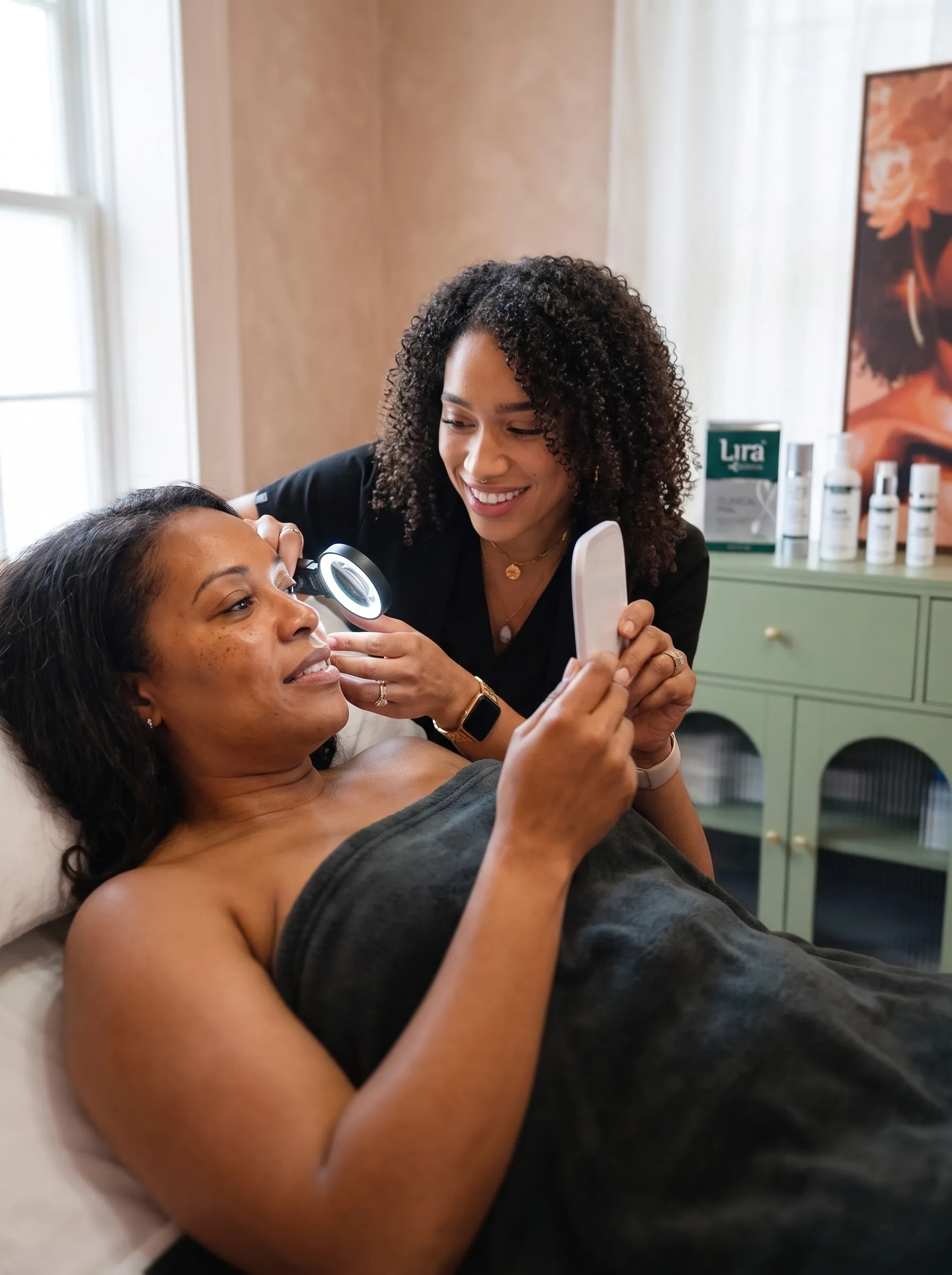
KIAMO SKIN treats cumulative UV damage and pigmentation from inland heat exposure at a one-room corrective facility in Mission Hills, San Diego (92103), about 11 miles west of La Mesa via I-8 (20 minutes). Kiki, a California licensed esthetician with 7+ years specializing in melanin-rich skin (Fitzpatrick types III-VI), uses Lira Chemical Peels for melasma and sun-induced hyperpigmentation that accumulates from year-round clear days and valley heat, DMK Enzyme Therapy for barrier repair in dehydrated inland skin, and HydraFacial for gentle corrective hydration. Clients travel from La Mesa Village on La Mesa Boulevard, Mt. Helix, Grossmont Center, Spring Valley, and Fletcher Hills. Treatments start at $199, with series planning that accounts for the fact that La Mesa sits 10 miles inland beyond the marine layer, where summer afternoons run 8-15°F warmer than coastal areas and cumulative UV load drives the pigmentation patterns inland clients present with.
Why is sun exposure worse inland?
La Mesa sits about ten miles from the coast, which is far enough to miss the marine layer that keeps the beach gray through May and June. Summer afternoons run roughly eight to fifteen degrees warmer than La Jolla or Mission Beach, and La Mesa falls inside the valley heat advisories the coast never gets. More clear days, year after year, is what builds the cumulative UV load behind the melasma and uneven tone this area books for. Lira chemical peels answer that, because strength escalates across a series rather than in one visit — and daily SPF is what holds the result.
What makes this different from spa facials
Clinical-grade equipment — HydraFacial Syndeo with medical-grade vacuum calibration and peptide infusion under pressure, not manual extraction with steam
Melanin-rich skin specialization — treatment strength, pacing, and product selection based on Fitzpatrick type and barrier condition, not a universal protocol
Series planning at consultation — full course mapped and scheduled at the first appointment, with treatment intervals set by recovery time, not convenience
One practitioner, one room — same esthetician assesses, treats, and adjusts the plan at every visit based on how your skin responded
Services for La Mesa clients
Lira chemical peels start at $199. A HydraFacial is $259. Full pricing is on each treatment page.
How treatments work
How Lira Peels treat inland UV damage and melasma in melanin-rich skin
Lira Clinical peels are formulated specifically for melanin-rich skin (Fitzpatrick types III-VI) with controlled-release acid delivery, tyrosinase inhibitors, and anti-inflammatory agents that lighten existing pigmentation without triggering the post-inflammatory hyperpigmentation (PIH) that standard peels cause in darker skin tones. The peel system uses lactic acid (gentle, hydrating), mandelic acid (large molecule, shallow penetration), and kojic acid (tyrosinase enzyme inhibitor) to address melasma and sun-induced uneven tone from cumulative inland UV exposure. Strength escalates across a 4-6 peel series — not in one aggressive visit.
- 1
Fitzpatrick classification and pigmentation mapping
First visit includes Fitzpatrick type assessment (III-VI scale determines melanocyte reactivity), pigmentation pattern analysis (where dark marks concentrate and why — hormonal melasma vs. sun-induced vs. post-inflammatory), and barrier condition evaluation. Two-week home prep with Lira ICE serum (peptides, niacinamide, tranexamic acid) stabilizes the barrier and reduces melanocyte reactivity before the first peel — skipping this step on melanin-rich skin is what causes PIH rebound
- 2
Controlled-release peel application with conservative contact time
Lira peel solution applied in thin layers with 2-3 minute intervals between coats to allow controlled penetration. Total contact time: 8-12 minutes depending on Fitzpatrick type (shorter for type V-VI, longer for type III-IV), existing PIH severity, and response to previous peels in series. First peel always conservative — strength escalates in sessions 2-4 based on how YOUR specific melanocytes responded
- 3
Neutralization and inflammation suppression
Peel neutralized when target frosting (light whitening) appears, not left on until burning. Cooling masque applied immediately to suppress inflammation and prevent melanocyte overreaction that causes PIH darker than the original marks. This neutralization timing is what separates safe peels from PIH-triggering peels on melanin-rich skin (10 minutes)
- 4
Post-peel tyrosinase inhibitor protocol (mandatory)
Strict 7-day indoor healing window with zero sun exposure, mineral SPF 50+ reapplied every 90 minutes starting day 3, and Lira ICE serum twice daily to inhibit tyrosinase enzyme activity (the enzyme that produces melanin). This protocol prevents rebound pigmentation — the peel lightens existing marks, the protocol keeps them from coming back darker during the healing window
- 5
Interval pacing for melanocyte recovery
Next peel not scheduled until barrier has fully recovered (14-21 days minimum) and you've completed the home care protocol. Rushing the series by peeling weekly or every 10 days is what causes PIH in melanin-rich skin — the barrier doesn't recover, melanocytes stay reactive, and the next peel triggers darker marks instead of lightening existing ones
Total treatment time: 45-60 minutes | Downtime: Mild flaking days 3-5 | Series: 4-6 peels, 14-21 days apart | Zero sun exposure for 7 days post-peel | Fitzpatrick III-IV can peel fall/winter/spring; V-VI schedule for fall/winter only to minimize UV exposure risk during inland valley heat
How DMK rebuilds barriers dehydrated by inland heat and low humidity
DMK Enzyme Therapy works with the skin's plasmatic system (the circulatory network that delivers oxygen and nutrients to cells) rather than chemically exfoliating the surface. The enzyme masque creates reverse osmosis that pulls oxygenated blood to the dermis, forces lymphatic drainage, and stimulates the skin to rebuild the lipid barrier that inland heat and low humidity dehydrate over time. This is the treatment for La Mesa clients whose skin has become tight, dehydrated, and reactive from years of valley heat exposure — often the necessary first step before chemical peels can be safely performed on melanin-rich skin.
- 1
Barrier integrity assessment and plasmatic baseline
First visit includes transepidermal water loss evaluation (measures how much moisture is evaporating from skin), barrier function testing, and reactivity mapping. DMK Pre-Cleanse (oil-based) removes surface debris without stripping an already-compromised barrier (5 minutes)
- 2
Enzyme masque application for plasmatic response
Thick enzyme formulation (proprietary blend of peptidase, protease, amylase) applied to face, neck, décolletage in upward strokes. As it dries over 10-15 minutes, the masque creates a pumping/pulsing sensation — that's reverse osmosis driving oxygenated blood to the surface and forcing capillary dilation. Total contact time: 45 minutes. The stronger the pulse, the more dehydrated and oxygen-starved your skin was before treatment
- 3
Peak plasmatic effect (the tightening/pulsing phase)
At 35-40 minutes, you'll feel intense tightness and see visible pulsing — this is NOT burning or irritation, it's forced circulatory response bringing fresh blood to dehydrated cells. For La Mesa clients with chronic dehydration from inland heat, the first session often produces the strongest pump because circulation has been compromised for months or years
- 4
Masque removal and barrier-rebuilding serum infusion
Masque removed with cool water and sponges, then DMK serums applied while pores are maximally receptive: Essential Fatty Acids (EFA) to rebuild lipid matrix, Beta Gel (lactic acid + niacinamide) for gentle exfoliation, Herb & Mineral Spray (zinc, magnesium, botanicals) to control inflammation and support barrier repair (10 minutes)
- 5
Home prescriptives (mandatory for barrier rebuild)
DMK home care products prescribed based on your specific dehydration pattern and indoor/outdoor exposure — Cleanser, Beta Gel, EFA, Herb & Mineral Spray used daily between sessions. The enzyme treatment rebuilds circulation; the home care rebuilds the lipid barrier. Without daily home support, you're back at dehydrated baseline within 72 hours
Total treatment time: 70-80 minutes | Downtime: Tightness for 12-24 hours, possible redness | Series: 4-6 sessions, 10-14 days apart for barrier rebuild | Can be done year-round in inland heat | Expect visible skin shedding days 3-5 (normal barrier turnover, not damage) | Often required before Lira peels on dehydrated melanin-rich skin
How HydraFacial provides gentle corrective hydration for dehydrated inland skin
HydraFacial Syndeo uses patented vortex extraction technology (vacuum suction paired with spiral tip delivery) to cleanse, extract, and hydrate without manual pressure, physical scrubbing, or aggressive acids that further compromise dehydrated barriers. For La Mesa clients with sun-damaged skin from inland UV exposure, HydraFacial is often the entry point — it establishes baseline hydration, tests reactivity, and preps the skin before escalating to stronger interventions like Lira peels or Procell microchanneling. Safe for all Fitzpatrick types, no PIH risk.
- 1
Vortex cleanse without stripping
Spiral tip with mild diamond abrasion dislodges surface debris, oxidized sebum, and mineral deposits without foaming surfactants that strip lipids from already-dehydrated barriers. Gentler than manual cleansing for reactive or compromised skin (5 minutes)
- 2
Beta-peel solution (optional on dehydrated skin)
Mild glycolic/salicylic blend loosens dead cells without the contact time or strength of standalone chemical peels. Can be reduced to 1-2 minutes or skipped entirely on extremely dehydrated barriers — we assess at each session (3 minutes standard)
- 3
Vortex extraction (vacuum-based, not manual)
Calibrated vacuum removes congestion using negative pressure instead of manual squeezing that can rupture capillaries in compromised skin. Suction strength adjustable for sensitive or reactive skin (5-8 minutes)
- 4
Peptide and hyaluronic acid infusion
Growth factor peptides, hyaluronic acid (holds 1000x its weight in water), niacinamide, and antioxidants delivered under pressure into dermis at 0.5-1mm depth without needles. Bypasses the damaged surface barrier and hydrates from beneath (5 minutes)
- 5
Red LED therapy for barrier support (optional)
630nm wavelength stimulates fibroblast activity to support collagen synthesis and reduce inflammation without heat. Safe for all Fitzpatrick types and particularly useful for dehydrated, reactive skin from inland heat exposure (5 minutes)
Total treatment time: 30-35 minutes | Downtime: None | Can be done monthly for maintenance or as prep before starting Lira peel series | Safe for all Fitzpatrick types | Often where La Mesa pigmentation plans start — hydrate first, peel second
Our commitment to La Mesa clients
Consultation-first approach
Every new client receives a full skin analysis before any treatment is booked. No surprises, no upselling mid-session. What you see in the consultation is what happens in the treatment room.
Series planning upfront
If your concern requires multiple visits, we map the full course at the first appointment — number of sessions, treatment intervals, total timeline, and investment. You'll know what to expect before you commit.
Same practitioner guarantee
One treatment room, one licensed esthetician. The person who assessed your skin at the first visit performs every treatment and adjusts the plan based on response.
Transparent pricing
All treatment costs are published and confirmed in writing before booking. No hidden fees, no surprise add-ons, no pressure to upgrade mid-treatment.
Common questions from La Mesa clients
How far is La Mesa from Mission Hills?
Roughly eleven miles west on I-8 through Mission Valley. Fifteen to twenty minutes on a clear freeway, and twenty-five to thirty-five on the westbound commute.
Is sun exposure worse inland than at the coast?
Yes. La Mesa sits about ten miles inland, far enough to miss the marine layer that keeps the beach gray through May and June, and summer afternoons run roughly eight to fifteen degrees warmer than La Jolla or Mission Beach. More clear days means more UV year after year, and cumulative UV is the most consistent driver of melasma and uneven tone.
How does cumulative inland UV affect pigmentation over time?
It builds gradually and without obvious incident — there is no single afternoon that looks like the cause. The pattern is months and years of clear-sky afternoons with less SPF than the UV required, and the result is uneven tone or melasma that appears to have arrived all at once. Inland areas like La Mesa accumulate more UV annually than the coast because the marine layer is absent for most of the day. A Lira peel series addresses the pigment that has already formed, and daily SPF is the variable that determines whether the result holds. Without it, new UV exposure continues triggering the same pathway the peels are working to clear.
How long does it take to drive from La Mesa Village to Mission Hills for a chemical peel?
About twenty minutes off-peak via I-8 west, approximately 11 miles. From La Mesa Village on La Mesa Boulevard near Spring Street and the trolley station, take Spring Street west to I-8 westbound on-ramp, stay in center or left lanes through Mission Valley past SDSU and Mission Valley Center, continue past SR-163 interchange (stay on I-8), and exit at Taylor Street (Exit 3) or Hotel Circle (Exit 1). From Grossmont Center, take Jackson Drive north to I-8 west (adds 3 miles, 5 minutes). From Mt. Helix, take Fuerte Drive north to connect with Grossmont area roads, then I-8 west. Mid-morning (10 AM-12 PM) and early afternoon (1-3 PM) are consistently the fastest windows. During weekday morning westbound commute (7-9 AM), I-8 through Mission Valley backs up significantly and can add 10-15 minutes. Most La Mesa clients schedule appointments after 9 AM or midday to avoid the worst westbound congestion on the return drive east.
Are chemical peels safe for melanin-rich skin in La Mesa, or will they make pigmentation worse?
Chemical peels are safe for melanin-rich skin ONLY when using formulations designed specifically for melanin-rich skin (Fitzpatrick types III-VI) with controlled-release acids, tyrosinase inhibitors, and conservative pacing. Standard glycolic or TCA peels at typical med spa strengths trigger post-inflammatory hyperpigmentation (PIH) in darker skin tones — making your melasma or dark marks worse, not better. Lira Clinical peels use lactic acid (gentle), mandelic acid (large molecule, shallow penetration), and kojic acid (blocks melanin production) with contact times adjusted to your specific Fitzpatrick type and melanocyte reactivity. Series is paced at 14-21 day intervals (not weekly) to allow full barrier recovery between treatments. Pre-treatment prep with barrier-stabilizing serums is mandatory, not optional. Post-treatment tyrosinase inhibitor protocol prevents rebound pigmentation. This conservative approach takes longer (4-6 peels over 8-12 weeks) but prevents the PIH that ruins outcomes on melanin-rich skin. If you've had PIH from previous peels, that means the protocol was wrong for your skin tone — not that your skin can't tolerate peels.
How much does a Lira peel series cost for La Mesa clients with melasma from inland sun exposure?
Lira Clinical Peels at KIAMO SKIN start at $199 for Gentle Renewal (entry-level lactic/mandelic blend) and $299 for Advanced formulations (higher concentration with additional brightening agents). Most La Mesa clients with melasma or sun-induced pigmentation from cumulative inland UV exposure need a series of 4-6 peels to see meaningful lightening, which is why we offer series pricing: $749 for a 4-peel series (saves $97 vs. individual pricing) or $1,399 for 6 peels (saves $195). The first visit includes Fitzpatrick type classification, pigmentation pattern mapping, and realistic timeline discussion — melasma from years of valley heat and clear days doesn't resolve in one peel. Series pricing is confirmed at consultation before you commit. Each peel session takes 45-60 minutes with 3-5 days of mild flaking and strict 7-day sun avoidance. Chemical peels on melanin-rich skin should be scheduled for fall, winter, or early spring to minimize UV exposure during inland valley heat — not June-August when La Mesa reaches 85-95°F daily.
Getting here from La Mesa
From La Mesa Village on La Mesa Boulevard, take Spring Street west to I-8 westbound — about eleven miles through Mission Valley to Taylor Street or Hotel Circle, then up into Mission Hills. From Grossmont Center near Jackson Drive, head north on Jackson to I-8 west. From Mt. Helix, Fuerte Drive north connects to the Grossmont area and onto I-8. From Spring Valley, SR-125 north leads to I-8 west at the El Cajon interchange. Stay on I-8 past SR-163 and exit at Taylor Street or Hotel Circle — fifteen to twenty minutes on a clear freeway, twenty-five to thirty-five on the westbound commute.
Roughly eleven miles — fifteen to twenty minutes west on I-8
From the treatment room
“The drive from La Mesa on I-8 is nothing once you see the results. My melasma has visibly faded after three sessions — something nothing else touched.”
Ready to book your consultation?
New clients start with a consultation that includes a full treatment. Book online or call —Within 24 hours on business days.