Areas we serve · Chula Vista
Chemical Peels & Pigmentation Facials for Chula Vista Clients
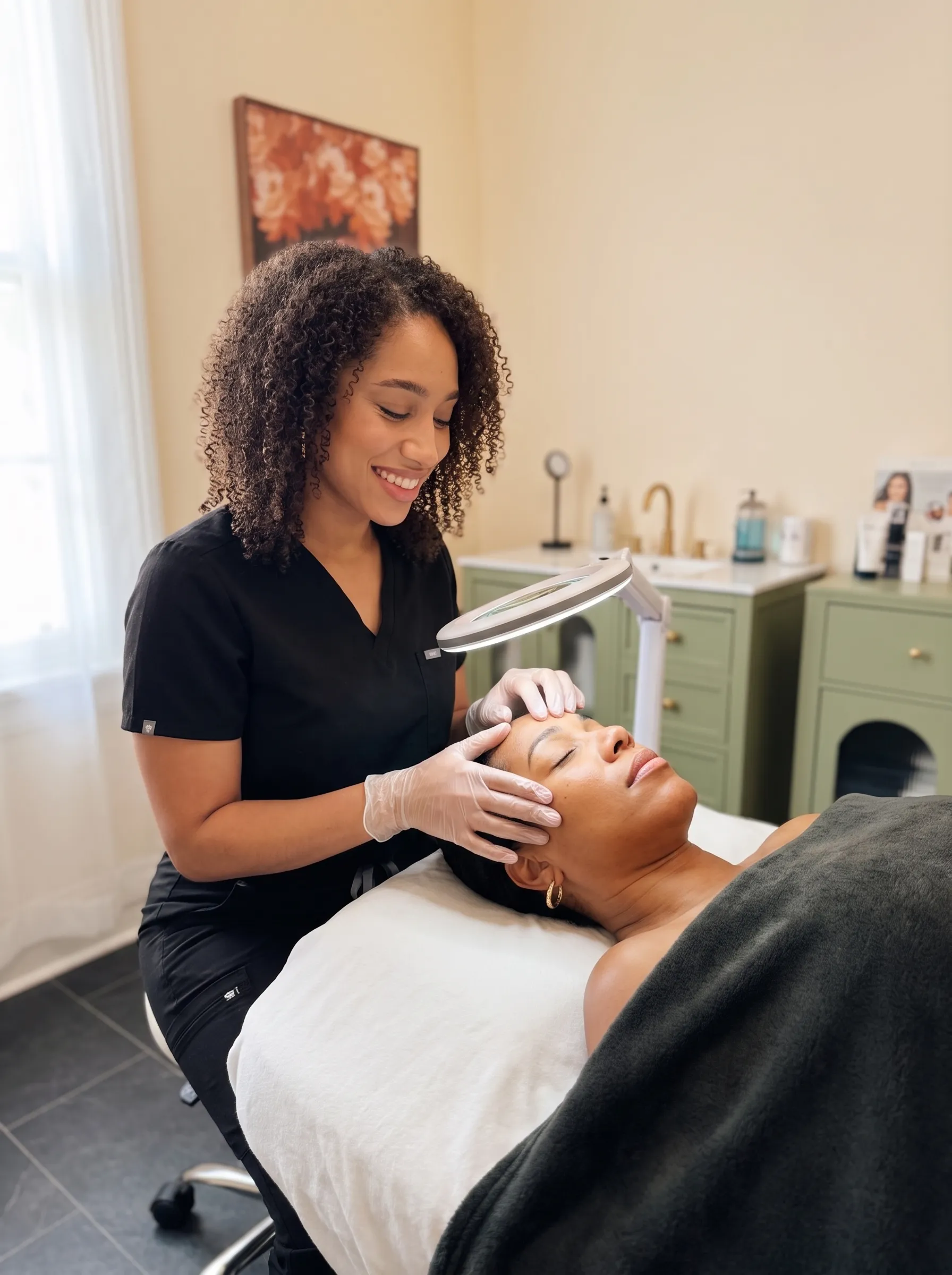
Looking for melasma or pigmentation treatment in Chula Vista? KIAMO SKIN is a one-room corrective studio in Mission Hills, about twenty-five minutes north, and pigmentation in melanin-rich skin is the work it is built around. Clients travel from across the city — Eastlake, Rancho del Rey, Otay Ranch, Bonita and the Third Avenue Village corridor. Every appointment is one-to-one with Kiki, a licensed esthetician, by appointment only.
Advanced certifications — click to view:
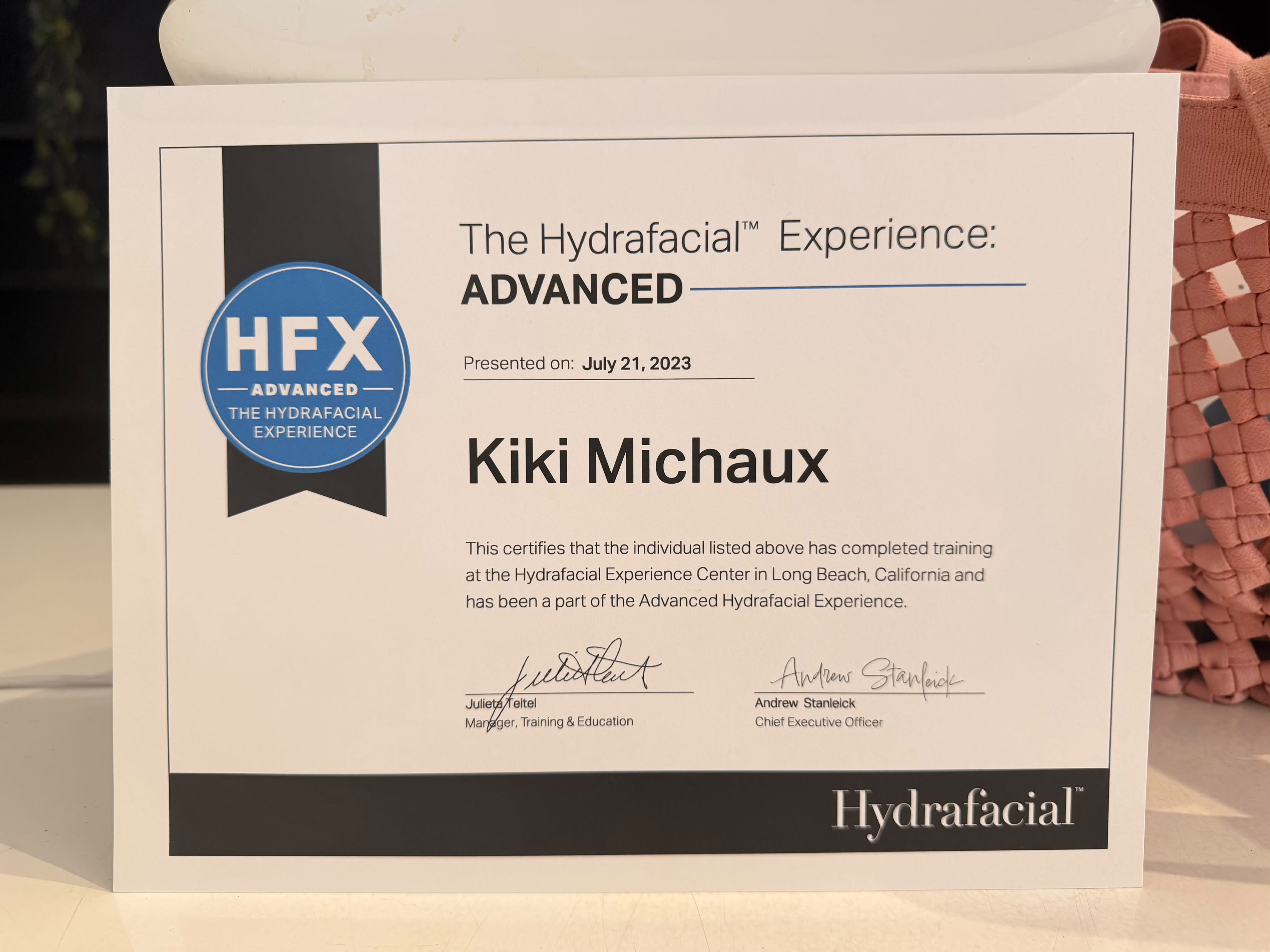
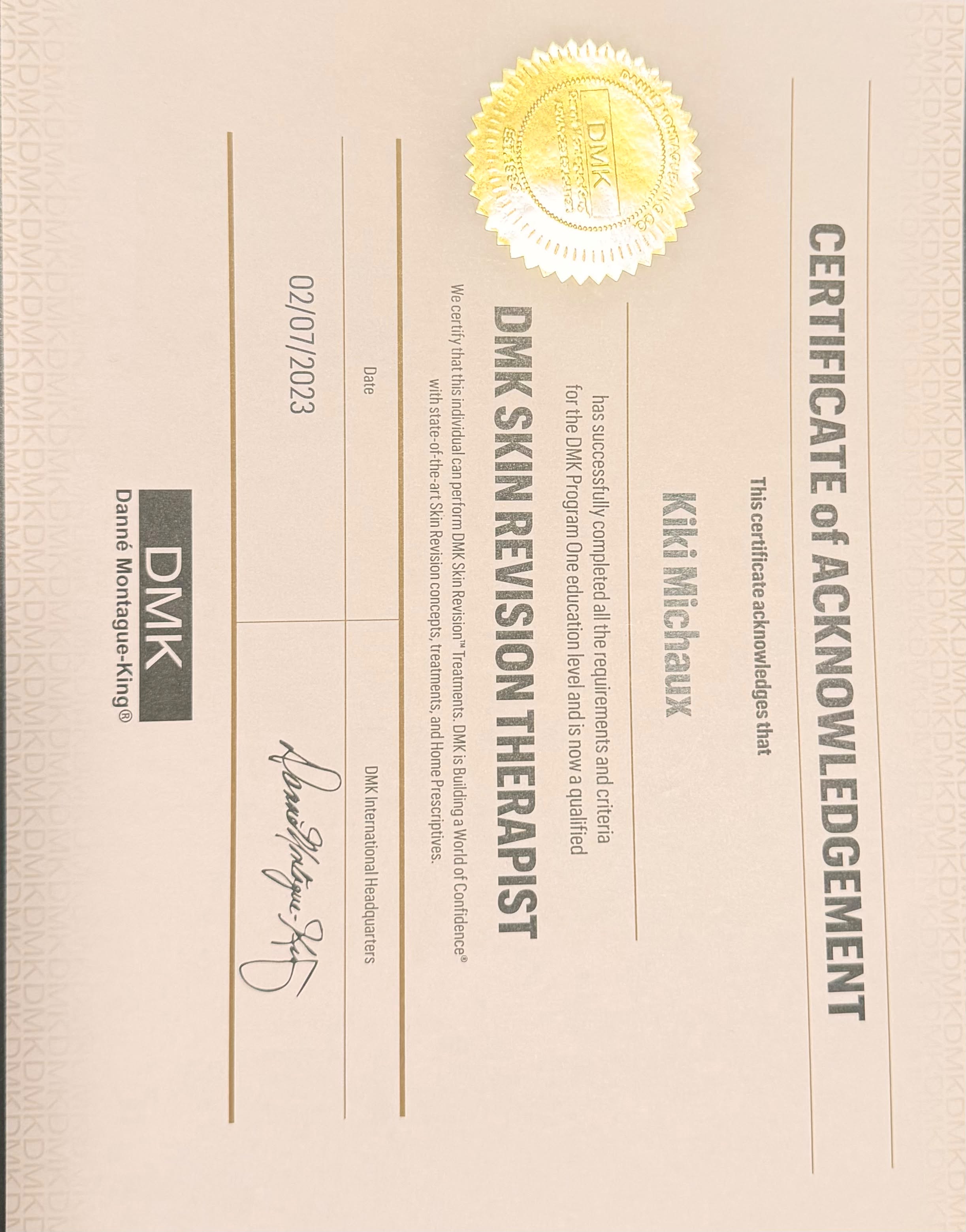
About thirteen miles — twenty to twenty-five minutes north off-peak
Quick Answer
KIAMO SKIN treats melasma and hyperpigmentation from inland UV exposure at a one-room studio in Mission Hills, San Diego (92103), about 13 miles north of Chula Vista via I-5. Kiki, a California licensed esthetician specializing in melanin-rich skin, uses Lira Chemical Peels and DMK Enzyme Therapy for clients from Eastlake, Otay Ranch, and Rancho del Rey. Treatments start at $199, with series planning for melanin-rich skin types (Fitzpatrick III-VI) to prevent post-inflammatory hyperpigmentation.
Why does the South Bay see more melasma than anywhere else in the county?
Chula Vista is San Diego County's second-largest city, and roughly six in ten residents identify as Hispanic or Latino. Melasma concentrates in Fitzpatrick skin types III to V, and chronic UV exposure is its most consistent trigger — which means the county's largest melanin-rich population is also its strongest melasma catchment. Eastlake and Rancho del Rey sit five to ten miles inland from the coast, past the marine layer that keeps the beach gray through May and June. Summers inland run eight to fifteen degrees warmer, and those neighbourhoods fall inside the valley heat advisories the coast never gets. More clear days, year after year, is the mechanism. Lira chemical peels answer it because the acid is matched to the skin at consultation and strength escalates across a series rather than in one visit. Aggressive resurfacing on melanin-rich skin triggers post-inflammatory hyperpigmentation — the exact problem you walked in with, only deeper. Pacing is the treatment.
Pigmentation in melanin-rich skin is what this studio was built around:
What makes this different from spa facials
Clinical-grade equipment — HydraFacial Syndeo with medical-grade vacuum calibration and peptide infusion under pressure, not manual extraction with steam
Melanin-rich skin specialization — treatment strength, pacing, and product selection based on Fitzpatrick type and barrier condition, not a universal protocol
Series planning at consultation — full course mapped and scheduled at the first appointment, with treatment intervals set by recovery time, not convenience
One practitioner, one room — same esthetician assesses, treats, and adjusts the plan at every visit based on how your skin responded
Services for Chula Vista clients
Lira chemical peels start at $199 for the Gentle Renewal and $299 for the Advanced. A first-time consultation and treatment is $249. Full pricing is on each treatment page.
How treatments work
How Lira Peels treat melasma without triggering PIH
Lira Clinical peels are formulated specifically for melanin-rich skin (Fitzpatrick types III-VI) with controlled-release acid delivery that prevents the aggressive exfoliation that can trigger post-inflammatory hyperpigmentation. The peel series addresses melasma at the melanocyte level using tyrosinase inhibitors and anti-inflammatory botanicals.
- 1
Pre-treatment preparation
Two-week home prep with Lira Clinical serum to stabilize the barrier and reduce melanocyte reactivity before the first peel (prevents PIH)
- 2
Controlled-release peel application
Lira peel solution (lactic, mandelic, kojic acids) applied in thin layers with 2-3 minute intervals between coats — not dumped on all at once (8-12 minutes total contact)
- 3
Neutralization and masque
Peel neutralized with alkaline solution, then hydrating masque applied to calm inflammation and prevent rebound pigmentation (10 minutes)
- 4
Post-peel protocol
Strict sun avoidance for 7 days, mineral SPF 50+ daily, and Lira ICE serum to inhibit tyrosinase activity during the healing window
Total treatment time: 45-60 minutes | Downtime: Mild flaking days 3-5 | Series: 4-6 peels, 14-21 days apart | No sun exposure for 7 days post-peel
Our commitment to Chula Vista clients
Consultation-first approach
Every new client receives a full skin analysis before any treatment is booked. No surprises, no upselling mid-session. What you see in the consultation is what happens in the treatment room.
Series planning upfront
If your concern requires multiple visits, we map the full course at the first appointment — number of sessions, treatment intervals, total timeline, and investment. You'll know what to expect before you commit.
Same practitioner guarantee
One treatment room, one licensed esthetician. The person who assessed your skin at the first visit performs every treatment and adjusts the plan based on response.
Transparent pricing
All treatment costs are published and confirmed in writing before booking. No hidden fees, no surprise add-ons, no pressure to upgrade mid-treatment.
Common questions from Chula Vista clients
How long is the drive from Chula Vista to Mission Hills?
Twenty to twenty-five minutes off-peak from most of western and central Chula Vista. From eastern neighbourhoods like Eastlake or Otay Ranch, SR-125 north to SR-54 west to I-805 north is usually the faster line than dropping to I-5 first. Once the South Bay starts moving north — generally from seven to nine in the morning — add fifteen to twenty minutes to any of those routes.
Which neighbourhoods in Chula Vista are closest to Mission Hills?
Western Chula Vista — the Third Avenue Village corridor, the bayfront near H Street and the marina district — is the closest, about thirteen miles up I-5. Eastlake and Rancho del Rey add two or three miles but run faster via SR-125 and I-805, avoiding the National City stretch of I-5. Otay Ranch, the furthest inland, is still inside thirty minutes off-peak on SR-125 north.
Why is melasma so much more common in the South Bay than in coastal San Diego?
Two factors work together. First, Chula Vista is the county's largest concentration of Hispanic and Latino residents, and melasma concentrates in Fitzpatrick skin types III to V. Second, the inland neighbourhoods — Eastlake, Rancho del Rey, Otay Ranch — sit past the marine layer that keeps the coast gray and UV-diffused through May and June. Inland summers run eight to fifteen degrees warmer, with more clear days and no cloud buffer between skin and the sun. Cumulative UV over years is the most consistent trigger for melasma, and that UV load is simply higher here than on the coast.
Can a chemical peel make dark marks worse on darker skin?
Yes, if the acid is too aggressive or applied before the skin is ready. Melanin-rich skin responds to trauma — including a poorly chosen peel — by producing more pigment, a reaction called post-inflammatory hyperpigmentation. This is the same process that causes the dark mark after a pimple, just driven by the peel instead of the breakout. Lira peels are chosen and paced differently for Fitzpatrick types III to V: the strength is matched to the skin at consultation and escalated across a series rather than maximised on the first visit. The pacing is the treatment, not a cautious compromise.
How many peel sessions does it take to see results on melasma?
Most clients notice visible change after two sessions, with the full result apparent across three to four. Melasma is a chronic condition driven by UV exposure, so the series addresses the pigment that has already formed while home care — specifically daily SPF — prevents new formation between visits. A plan without consistent SPF will not hold, because new UV exposure will continue triggering the same pathway the peels are working to clear.
How long does it take to drive from Chula Vista Eastlake to Mission Hills for a chemical peel?
About twenty-five to thirty minutes outside commute hours. From Eastlake near Olympic Parkway, take SR-125 north (toll road) toward I-805, then I-805 north through National City to the I-5 north merge near Downtown. Exit at Washington Street (Exit 17) — total distance is 13 miles. Mid-morning (10 AM-12 PM) is the fastest window. During the northbound morning commute (7-9 AM), traffic stacks on I-5 near Downtown and can push the drive to forty-five minutes. From Otay Ranch or Bonita, you can bypass SR-125 tolls by taking Bonita Road west to I-805 north directly.
Getting here from Chula Vista
From Third Avenue Village, head north on Broadway to SR-54 west, then I-805 north to Washington Street — about twelve miles. From Eastlake or Rancho del Rey, take SR-125 north to SR-54 west to I-805 north; this avoids the National City stretch of I-5 where northbound delays build. From the Chula Vista bayfront near H Street or the marina district, I-5 north runs about thirteen miles to Washington Street. From Otay Ranch Town Center, SR-125 north is the most direct line. Off-peak any of these routes is twenty to twenty-five minutes; once the South Bay starts moving north, plan for forty.
About thirteen miles — twenty to twenty-five minutes north off-peak
From the treatment room
“I came from Chula Vista specifically for the peel series. The difference in my hyperpigmentation after four sessions is something I would not have believed.”
Ready to book your consultation?
New clients start with a consultation that includes a full treatment. Book online or call —Within 24 hours on business days.