Journal · 18 min read
Hyperpigmentation Treatment Guide: What Actually Works for Dark Spots, Melasma & PIH
If you have struggled with stubborn dark spots, melasma, or uneven skin tone in San Diego, the right combination of professional treatments and medical-grade home care can produce dramatic improvement—but only if the approach is calibrated for your skin tone and pigmentation type.
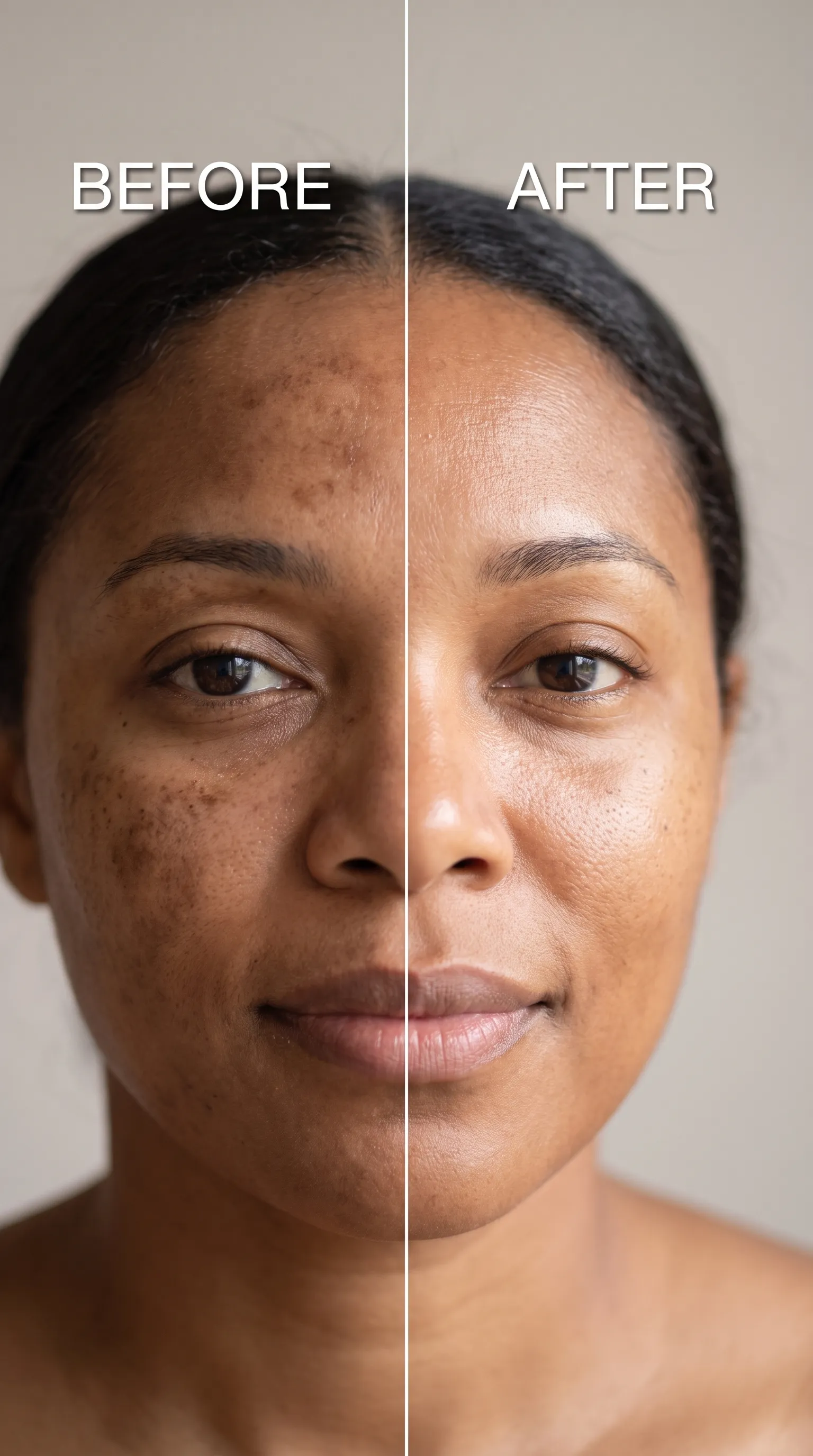
Hyperpigmentation occurs when melanocytes produce excess melanin in response to inflammation, hormones, or UV exposure, creating darker patches on the skin. While any skin tone can develop pigmentation concerns, melanin-rich skin has more reactive melanocytes that make post-inflammatory hyperpigmentation significantly more likely.
Whether dealing with melasma, post-acne marks, or sun damage, understanding the science behind your specific condition is essential. This guide synthesizes the latest dermatological research from 2022-2025, including breakthrough studies on tranexamic acid, picosecond laser safety for darker skin tones, and evidence-based combination protocols.
What is hyperpigmentation and why does it happen?
Hyperpigmentation is any condition where patches of skin become darker than surrounding areas due to excess melanin production. Melanocytes become overactive in response to triggers including UV radiation, inflammation, hormonal fluctuations, and skin injury.
The process begins when triggers activate tyrosinase, the enzyme responsible for melanin synthesis. In melanin-rich skin (Fitzpatrick types IV-VI), melanocytes are inherently more reactive—a protective adaptation against UV damage that unfortunately makes these skin tones more susceptible to hyperpigmentation following inflammation or injury.
Understanding your specific trigger determines the most effective treatment approach. UV exposure from San Diego's intense sunlight (averaging 266 sunny days per year) can trigger melanin production even during brief outdoor exposure, making photoprotection essential year-round. This is especially true in inland areas like Chula Vista where the marine layer doesn't provide the same UV diffusion as coastal neighborhoods, and where melanin-rich skin demographics make melasma one of the most common reasons clients seek treatment.
Melasma, PIH, and sun spots: What is the difference?
Melasma is hormonally triggered symmetric pigmentation often on cheeks and forehead, while post-inflammatory hyperpigmentation develops after acne, injury, or inflammation. Sun spots result from cumulative UV damage and appear as discrete brown spots on sun-exposed areas.
Melasma presents as brown or gray-brown patches in symmetric patterns—typically on the cheeks, bridge of the nose, forehead, chin, and upper lip. Triggered by hormonal fluctuations from pregnancy, birth control, or thyroid disorders combined with UV exposure. Women of color and those with melanin-rich skin are disproportionately affected.
Post-inflammatory hyperpigmentation appears wherever skin has experienced trauma—acne breakouts, burns, harsh peels, aggressive laser treatments, eczema flares, or even insect bites. The darkened areas follow the exact location of the previous injury rather than forming symmetric patterns.
Solar lentigines appear as well-defined brown spots on chronically sun-exposed areas: face, chest, hands, arms, and shoulders. These represent cumulative UV damage over years or decades.
Why distinction matters: Melasma requires long-term maintenance because hormonal triggers remain active. PIH will eventually fade on its own if you prevent further inflammation. Sun spots are permanent without treatment but do not worsen unless UV exposure continues.
How long does hyperpigmentation take to fade?
Untreated post-inflammatory hyperpigmentation typically persists for 18-24 months, though epidermal pigmentation responds to treatment within 8-12 weeks while deeper dermal pigmentation may take 6-12 months or longer. Melasma requires ongoing maintenance with high recurrence rates without sun protection.
The timeline depends on whether your pigmentation is epidermal (top layer) or dermal (deeper). Epidermal pigmentation appears brown under Wood's lamp and responds well to topical treatments. Expect measurable improvement in 8-12 weeks with consistent treatment and strict sun protection.
Dermal pigmentation appears blue-gray under Wood's lamp and sits too deep for topical ingredients to reach effectively. This type requires professional treatments like chemical peels that can reach the dermal layer. Even with professional intervention, expect 6-12 months for significant improvement.
At KIAMO, we have seen remarkable transformations in patients who commit to comprehensive pigmentation protocols. One San Diego patient achieved dramatic improvement in stubborn melasma and post-inflammatory hyperpigmentation over several months using a multi-modal approach: prescription-strength topicals, professional treatments, and strict photoprotection. The before photos showed significant dark patches across the cheeks and forehead. After consistent treatment with medical-grade lightening agents, a series of targeted chemical peels, and unwavering commitment to mineral sunscreen with iron oxides, the improvement was striking: visibly clearer, more even-toned skin with the majority of the hyperpigmentation faded.
This transformation exemplifies what is possible when evidence-based treatments meet patient dedication. The key factors in success: starting with realistic expectations (6-12 months for significant improvement, not 6 weeks), understanding that melasma requires ongoing maintenance rather than a cure, committing to daily sunscreen regardless of weather or plans, and working with a provider who understands the unique challenges of treating pigmentation in melanin-rich skin.
The most common reason pigmentation treatment fails is not the treatment itself—it is inconsistency. Missing sunscreen applications on cloudy days, skipping retinoid applications when skin feels sensitive, discontinuing treatment the moment improvement appears, or trying a new product every few weeks instead of giving a protocol time to work. Effective pigmentation treatment requires sustained commitment measured in months, not weeks.
The honest truth about melasma: it is not cured, it is managed. Even after achieving significant lightening, maintenance treatment and sun protection must continue indefinitely. Most patients who discontinue treatment see recurrence within 6-12 months.
Is treatment different for darker skin tones?
Yes—melanin-rich skin (Fitzpatrick types IV-VI) requires modified treatment protocols because more reactive melanocytes increase the risk of post-inflammatory hyperpigmentation from aggressive treatments. Certain laser wavelengths, chemical peel concentrations, and even some topical actives must be adjusted.
The fundamental challenge: the very treatments designed to reduce pigmentation can paradoxically cause more pigmentation if applied too aggressively. Research consistently shows that individuals with skin of color experience treatment efficacy gaps partly because protocols developed primarily on lighter skin tones do not translate directly.
The risk is real and documented: aggressive chemical peels, high-energy laser treatments, and even some topical actives used at concentrations appropriate for lighter skin can trigger a new wave of hyperpigmentation that is often worse than the original concern. This phenomenon—treatment-induced post-inflammatory hyperpigmentation—is why providers experienced in treating melanin-rich skin take a conservative, staged approach rather than pursuing maximum strength from the first session.
Laser considerations: Older Q-switched lasers at shorter wavelengths (532nm, 755nm) carry high risk for PIH in darker skin because they target melanin indiscriminately—including the melanin in surrounding healthy skin. Safer options include 1064nm Nd:YAG lasers and newer picosecond technology at longer wavelengths. Studies from 2025 show that 730nm picosecond lasers can safely treat melasma in Chinese patients (Fitzpatrick III-IV) with minimal PIH risk—a significant advancement over previous technology.
Chemical peel modifications: Medium-depth peels (TCA 20-35%) that work well on lighter skin can cause severe PIH on melanin-rich skin. Instead, protocols use lower concentrations (TCA 10-15%, glycolic acid 20-30%), longer intervals between treatments (6-8 weeks instead of 4 weeks), and extensive pre-treatment with skin lightening agents to stabilize melanocytes.
Visible light protection: UV protection alone is not sufficient for melasma in darker skin tones. Visible light also stimulates melanin production, which is why mineral sunscreens containing iron oxides (which physically block visible light) outperform chemical sunscreens for pigmentation concerns.
At KIAMO, treating melanin-rich skin is the foundation of the practice. Protocols are modified from the ground up: chemical peels start at lower concentrations with extended intervals between treatments. Pre-treatment always includes tyrosinase inhibitors for 2-4 weeks before any professional treatment. The pacing matters more than the strength—slower, consistent progress prevents the inflammatory cascade that triggers post-inflammatory hyperpigmentation in reactive skin.
This specialized approach means treatments that would be standard for lighter skin tones are carefully recalibrated for Fitzpatrick IV-VI patients, prioritizing safety and long-term results over aggressive quick fixes that often backfire. The studio does not use one-size-fits-all protocols—every treatment plan is adjusted based on the client's specific Fitzpatrick type, pigmentation depth (epidermal versus dermal), trigger factors (hormonal, inflammatory, UV), and treatment history.
Pre-treatment preparation protocols: Before the first professional treatment (peel or microchanneling), clients begin a 2-4 week at-home preparation phase using tyrosinase inhibitors (vitamin C, niacinamide, or azelaic acid) to calm melanin production. This preparation significantly reduces the risk of rebound hyperpigmentation—a common complication when aggressive treatments are applied to unprepared melanin-rich skin.
Post-treatment protocols: After every professional treatment, clients receive detailed aftercare instructions including barrier repair (ceramide-rich moisturizers), inflammation control (avoiding heat exposure, exercise, and irritating products for 48-72 hours), and strict photoprotection (mineral SPF 50+ with iron oxides reapplied every 2 hours). Non-compliance with post-treatment protocols is the primary cause of treatment complications.
What ingredients actually work for hyperpigmentation?
The most evidence-backed ingredients are hydroquinone (2-4%), tranexamic acid, retinoids, azelaic acid, niacinamide, kojic acid, and vitamin C—each working through different mechanisms to reduce melanin production or promote cell turnover. Combination approaches consistently outperform single-ingredient treatments.
No single ingredient will dramatically transform stubborn pigmentation in 2-4 weeks despite marketing claims. Effective treatment requires combining multiple mechanisms—inhibiting melanin production, accelerating cell turnover, reducing inflammation, and blocking UV/visible light—sustained over months.
Hydroquinone (2-4%) remains the most effective single agent, working by inhibiting tyrosinase. Prescription-strength 4% hydroquinone significantly outperforms OTC 2% formulations. However, the FDA has issued warnings about ochronosis with prolonged use. Recommended protocol: cycle 3 months on, 3 months off.
Tranexamic acid has emerged as a highly effective alternative. A 2023 expert consensus concluded that oral TXA (250mg twice daily for 3-6 months) produces comparable results to hydroquinone without the risk of ochronosis. It works through dual mechanisms: inhibiting melanin synthesis and reducing the vascular component of melasma.
Retinoids (prescription tretinoin 0.025-0.1%, or OTC adapalene) accelerate skin cell turnover, causing pigmented cells to shed faster. Tretinoin is significantly more effective than cosmetic retinol. Start with lower concentrations applied 2-3 times weekly, gradually increasing to nightly. Expect improvement around the 12-week mark.
Azelaic acid (15-20%) inhibits tyrosinase while reducing inflammation—particularly valuable for patients whose hyperpigmentation coexists with acne or rosacea. One of the few actives safe during pregnancy.
The key: combination therapy. Using multiple ingredients with complementary mechanisms produces synergistic effects that exceed any single ingredient alone.
Building an effective routine
Morning routine: Gentle cleanser, vitamin C serum (pH 3-3.5), niacinamide or azelaic acid, moisturizer, mineral sunscreen SPF 50+ with iron oxides.
Evening routine: Double cleanse, treatment serum (tranexamic acid, kojic acid, or hydroquinone if prescribed), retinoid, moisturizer.
Product layering rules: Vitamin C first on bare skin; wait 1-2 minutes between actives; never combine vitamin C and retinoid in same routine; introduce one new active at a time (2-4 weeks apart) to identify irritation sources.
Niacinamide (4-5%) works by preventing melanosomes (melanin-containing packets) from transferring to keratinocytes, effectively blocking pigment from spreading. It also strengthens the skin barrier and reduces inflammation. Niacinamide pairs well with virtually all other actives and rarely causes irritation.
Vitamin C (L-ascorbic acid 10-20%) functions as a tyrosinase inhibitor and antioxidant that helps prevent new pigmentation from UV exposure. It must be formulated at low pH (3-3.5) to penetrate effectively, which means it should be applied first in your morning routine. Look for stabilized formulations in opaque, airtight packaging, as vitamin C degrades rapidly when exposed to light and air.
Kojic acid (1-4%) is another tyrosinase inhibitor often combined with other lightening agents. While effective, it can cause irritation in some users. Cysteamine 5% cream shows comparable efficacy to hydroquinone in 2024 research without the ochronosis risk, making it an emerging alternative for long-term use.
Which professional treatments are most effective?
Chemical peels, microneedling, and laser treatments accelerate pigmentation improvement when combined with medical-grade topicals, with combination protocols showing 94% patient preference over single modalities. Treatment selection depends on pigmentation type, skin tone, and depth.
KIAMO's chemical peel protocols prioritize safety for all skin tones. The Lira Gentle Renewal Peel ($199) uses lactic acid, mandelic acid, and kojic acid—larger-molecule acids that penetrate more slowly and carry lower PIH risk for melanin-rich skin. For more advanced concerns, the Lira Advanced Peel ($299) layers multiple mechanisms while maintaining controlled depth. Every peel includes mandatory pre-treatment: clients use tyrosinase inhibitors for 2-4 weeks before their first peel. Treatments are spaced 6-8 weeks apart rather than the typical 4 weeks. Results appear gradually: most clients see measurable improvement after 3-4 treatments in a series.
KIAMO's Procell Microchanneling ($475 per session, or $1,199 for a series of 3) combines controlled micro-injury with targeted serum infusion. The treatment creates precise microchannels in the skin, triggering collagen production while allowing up to 1000x better penetration of corrective serums. During treatment, growth factor serums and skin brightening actives are applied directly into these channels—ingredients like tranexamic acid, vitamin C, and peptides reach depths that topical application alone cannot achieve. The procedure is safe for all skin tones and generates minimal heat. Downtime is minimal: redness for 24-48 hours. Most clients achieve optimal results with 3-6 sessions spaced 4-6 weeks apart.
KIAMO does not currently offer laser treatments—and that is intentional. The studio specializes in non-laser modalities that carry significantly lower risk for melanin-rich skin: chemical peels formulated for deeper skin tones, Procell Microchanneling, and medical-grade topical protocols. This approach eliminates the post-inflammatory hyperpigmentation risk that even newer picosecond lasers can trigger in reactive melanocytes.
Understanding laser technology for pigmentation
Laser treatments for pigmentation have evolved dramatically over the past five years, with newer technology offering significantly improved safety profiles for darker skin tones. However, understanding the risks remains essential.
Older technology (higher PIH risk for dark skin): Q-switched Nd:YAG at 532nm; Q-switched alexandrite at 755nm; Intense pulsed light (IPL). These carry significant risk for post-inflammatory hyperpigmentation in melanin-rich skin.
Safer modern options: 1064nm Nd:YAG (longer wavelength means less melanin absorption in surrounding skin); Picosecond lasers (730nm, 755nm, 1064nm); Fractionated non-ablative lasers.
The breakthrough with picosecond technology is the pulse duration: delivering energy in trillionths of a second (picoseconds) rather than billionths (nanoseconds) causes photomechanical rather than photothermal destruction. Less heat equals less inflammation equals lower PIH risk. 2025 research on 730nm picosecond lasers demonstrates effective melasma treatment in Asian skin (Fitzpatrick III-IV) with minimal adverse effects.
Realistic expectations: Lasers can significantly improve melasma, but they are not a cure. Many patients see 50-70% improvement after a series of 4-8 treatments, but maintenance is required. Some melasma actually worsens with laser treatment—which is why test spots and conservative settings are essential, especially for darker skin.
What is safe for hyperpigmentation during pregnancy?
Pregnant and breastfeeding individuals should avoid retinoids and hydroquinone, but safe evidence-backed alternatives include azelaic acid, niacinamide, kojic acid, vitamin C, and glycolic acid at appropriate concentrations. Strict mineral sunscreen use (SPF 50+ with zinc oxide or titanium dioxide) is the single most important preventive measure.
Pregnancy-triggered melasma (often called the mask of pregnancy or chloasma) affects up to 70% of pregnant individuals due to hormonal surges that stimulate melanocytes. The increased estrogen, progesterone, and melanocyte-stimulating hormone create the perfect storm for pigmentation—especially when combined with UV exposure.
AVOID during pregnancy and breastfeeding: Hydroquinone (Category C—limited human data, potential risk); Retinoids including tretinoin, adapalene, tazarotene (Category C-X—known teratogenic effects); High-strength chemical peels (TCA greater than 10%); Most oral medications including tranexamic acid.
SAFE alternatives backed by evidence: Azelaic acid 15-20% (Category B—safe during pregnancy); Niacinamide 4-5% (well-tolerated, no contraindications); Kojic acid 1-4% (limited but reassuring data); Vitamin C 10-20% (topical vitamin C is safe); Glycolic acid peels 20-30% (superficial peels only, limited systemic absorption).
Sunscreen is non-negotiable: Mineral sunscreens with zinc oxide 20-25% or titanium dioxide 5-10% are preferred during pregnancy over chemical formulations. Choose SPF 50+, apply generously, and reapply every 2 hours during sun exposure. Many patients see spontaneous improvement in pregnancy-related melasma within 6-12 months postpartum as hormones normalize.
Managing hyperpigmentation in San Diego's climate
San Diego's year-round sun exposure (averaging 266 sunny days and high UV index) makes consistent photoprotection essential—even brief car rides or outdoor walks can trigger melanin production. Mineral sunscreens with iron oxides provide protection against both UV and visible light.
Living in San Diego creates unique challenges. While other regions experience seasonal UV variation, San Diego maintains a UV index of 5-7 even in December and January—requiring year-round vigilance that many patients underestimate.
San Diego clients face unique challenges: even running errands means UV exposure during drives, walking across parking lots, sitting near restaurant windows. One client's melasma consistently worsened each summer despite religious evening skincare—until we identified the culprit: her daily beach walks at 4pm. She thought late afternoon was safe, but San Diego's UV index stays at 6-8 until sunset during summer. After shifting walks to before 9am and adding a wide-brimmed hat, her pigmentation finally started improving.
San Diego sunscreen protocol: Mineral sunscreen SPF 50+ with zinc oxide or titanium dioxide; must contain iron oxides (look for tinted formulations); apply generously morning and reapply every 2 hours during outdoor activities; apply sunscreen even if staying home—UVA penetrates windows.
Common San Diego UV exposure mistakes
The overcast mornings feel like sun protection and are not. Cloud cover removes the warmth that people use to judge risk while letting a large share of ultraviolet through. The marine layer is not a substitute for sunscreen.
Driving exposure: Windshield and side window glass blocks UVB but allows UVA penetration during commutes. This cumulative exposure contributes to pigmentation on the left side of the face (driver side) and hands. Apply sunscreen before morning commutes and consider UV-blocking window film.
Indoor exposure: UVA penetrates windows. Clients who work from home near windows or spend time in sun-filled rooms still need daily sunscreen application. Visible light from screens and indoor lighting can also darken melasma in susceptible individuals.
Beach and outdoor dining: Reflective surfaces (ocean, pool water, white sand, concrete patios) amplify UV exposure by up to 25%. Sitting under an umbrella or pergola reduces direct sun but does not eliminate reflected UV. Reapplication every 2 hours is mandatory, not optional.
Why does hyperpigmentation keep coming back?
Melasma is a chronic condition with near-certain recurrence without ongoing maintenance because hormonal and UV triggers remain active, making it manageable but not permanently cured. PIH and sun spots can also return if the underlying causes (inflammation, sun exposure, picking) are not addressed alongside treatment.
Common mistakes that cause recurrence: Stopping sunscreen after improvement; discontinuing all actives once pigmentation fades; one sunburn undoing months of progress; picking and touching affected areas; using irritating products that trigger inflammation; hormonal changes (starting or stopping birth control, pregnancy, menopause).
KIAMO's long-term maintenance protocols focus on sustainable management rather than aggressive cycles that lead to burnout. After achieving significant improvement (typically 60-80% lightening after 4-6 months of active treatment), clients transition to a maintenance phase: prescription retinoid 2-3 nights per week to maintain cell turnover, vitamin C or niacinamide serum every morning for ongoing tyrosinase inhibition, and mineral sunscreen with iron oxides as a non-negotiable daily step.
Professional maintenance involves quarterly chemical peels (every 12-16 weeks) rather than monthly treatments, with Procell Microchanneling sessions 2-3 times yearly to sustain collagen production and prevent regression. The clients who maintain their results long-term are the ones who accept that pigmentation management is ongoing—not a 3-month sprint followed by abandoning all protocols.
Many cycle prescription hydroquinone (3 months on, 3 months off) rather than using it continuously, replacing it during off months with alternatives like tranexamic acid or cysteamine. The maintenance phase costs significantly less than active treatment ($400-600 quarterly versus $1,200-1,800 during intensive phases) while preventing the frustrating cycle of improvement followed by complete relapse.
What about chemical peels versus laser treatments?
Meta-analyses comparing laser and chemical peels show comparable efficacy for pigmentation, with chemical peels offering advantages in cost and downtime. A typical protocol involves 4-6 treatments spaced 4-8 weeks apart, with maintenance peels every 3-6 months.
Chemical peels use controlled acids to remove the top layers of skin, taking pigmented cells with them while stimulating cellular turnover. The depth and acid type must be carefully selected based on skin tone and pigmentation depth.
For lighter skin tones (Fitzpatrick I-III): Glycolic acid 30-70%, Salicylic acid 20-30%, TCA 15-25%, Jessner's solution.
For melanin-rich skin (Fitzpatrick IV-VI): Lower concentrations: glycolic 20-30%, salicylic 20%, TCA 10-15%; longer intervals between treatments (6-8 weeks versus 4 weeks); mandatory pre-treatment with tyrosinase inhibitors for 2-4 weeks to stabilize melanocytes.
Downtime ranges from none (superficial peels) to 5-7 days of visible peeling (medium-depth peels). Expect redness, flaking, and temporary darkening before the lightening effect becomes visible at 2-4 weeks post-treatment.
When should you see a provider?
See a dermatology or aesthetic provider if over-the-counter products have not improved your pigmentation after 12 weeks, if you need prescription-strength treatments, or if you are unsure whether your pigmentation is melasma, PIH, or another condition. Professional evaluation is especially important for melanin-rich skin.
KIAMO's consultation process begins with understanding what you have already tried and why it did not work. The First-Time Client Treatment ($249) is a full corrective facial that also functions as a diagnostic session: skin is analyzed under magnification to assess pigmentation depth (epidermal vs dermal), identify contributing factors, and determine your Fitzpatrick type to ensure safe treatment protocols. This is not a relaxation facial—it is a strategic session where you learn exactly what is causing your pigmentation, which treatments are safe for your skin tone, and what realistic timelines look like. You leave with a phased treatment plan, home care recommendations, and realistic expectations. The studio is located in Mission Hills at 3067 Reynard Way, five minutes from Hillcrest, Bankers Hill, and Little Italy, with free parking. Request appointments through Vagaro or call (310) 595-0872.
Written by Kiki, Licensed Esthetician, California Board of Barbering & Cosmetology, with 7+ years treating melanin-rich skin at KIAMO Skin in Mission Hills, San Diego.
Common questions
Hyperpigmentation questions
Can hyperpigmentation be permanently cured?
Is laser treatment safe for dark spots on dark skin?
What SPF should I use to prevent hyperpigmentation?
Can I use retinol and vitamin C together for dark spots?
Also in the journal
Three kinds of dark mark, and why one facial cannot fix all three
Choosing a facial for hyperpigmentation before you know which kind you have is the most common reason treatment fails — and occasionally the reason it backfires.
June gloom is not sun protection
The marine layer is the single most expensive misunderstanding in San Diego skincare. It looks like cover. It is not cover.
San Diego hard water and your scalp
If your scalp flakes, itches, or feels coated no matter what shampoo you buy, the shampoo may not be the variable worth changing.
Microneedling on dark skin, and why depth decides the outcome
The question is not really whether needling works on melanin-rich skin. It is whether the person holding the device has set the depth for the skin in front of them.
Is dermaplaning safe for dark skin? Here is what actually matters.
The question is not really whether dermaplaning works on darker skin. It is whether the blade angle and pressure match the skin in front of it.
Professional Scalp Treatment San Diego: Keravive for Dandruff, Flaking & Hair Health
Looking for professional scalp treatment in San Diego? KIAMO SKIN offers Keravive therapy for dandruff, seborrheic dermatitis, dry scalp, and hair thinning. While over-the-counter shampoos treat surface symptoms, Keravive addresses the root cause.
San Diego Scalp Treatments: How Does Keravive Work?
Keravive is a clinical scalp treatment designed to remove years of product buildup, hard water minerals, and oil congestion that shampoo can't reach. For San Diego residents dealing with ocean humidity, hard water, and year-round sun exposure, it addresses the root causes of flaking, tightness, and hair thinning.
How much does a chemical peel cost in San Diego?
The price of a chemical peel in San Diego varies by depth, formulation, and whether it is part of a treatment series — but the more important question is which one your skin actually needs.