Skip to content
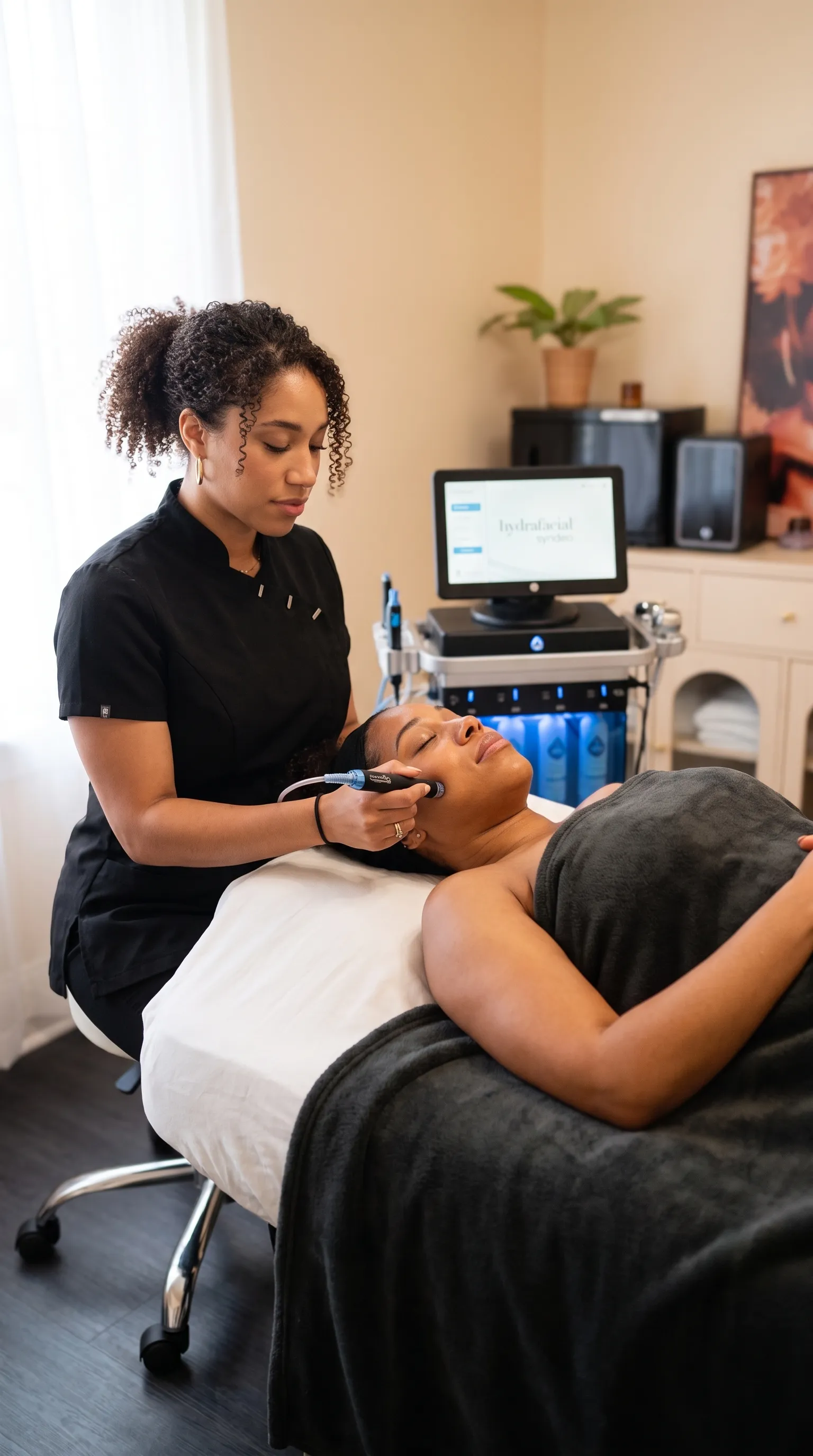
HydraFacial series for North Park clients

No RF Heat · Growth Factor Serum · 3-Session Series

Procell Microchanneling in North ParkScarring and texture, corrected without the heat that causes pigment.

Procell creates thousands of microscopic channels and delivers its stem cytokine serum straight into them, so the repair is directed rather than left to chance. There is no radiofrequency heat anywhere in the treatment — which is what makes it safe on melanin-rich skin, where thermal trauma is itself a pigment trigger. $475 a session, or $1,199 for a series of three. For North Park that means a series that fits a ten-minute drive — which is what makes finishing one realistic.

  • No RF heat — no thermal pigment trigger
  • Safe for Fitzpatrick types IV–VI
  • LED and barrier protection included
  • Series pricing: $1,199 for three

Procell Microchanneling — Single Session

$475

  • By appointment only
  • Free parking
  • Consultations included — the plan is set before you book
  • Licensed esthetician — California Board of Barbering & CosmetologyKiki performs every treatment, in a one-to-one private studio in San Diego.
  • 7+ years of corrective skin workAdvanced training in HydraFacial Syndeo, Procell microchanneling, DMK enzyme therapy, and LIRA Clinical peels.
  • Prices published before you bookNothing is quoted at the door, and the first visit includes the consultation that decides the plan.
“I've been going for 4–5 years now, and I honestly wouldn't trust anyone else with my skin.”
— Arica L., Google

Quick Answer

KIAMO Skin treats pigmentation and acne scarring in melanin-rich skin at a one-room facial spa in San Diego (92103), just 3.5 miles west of North Park via University Avenue and Washington Street — ten minutes with no freeway required. Kiki, a California licensed esthetician with 7+ years specializing in melanin-rich skin (Fitzpatrick types III-VI), uses Lira Chemical Peels for post-inflammatory hyperpigmentation, Dermaplaning for surface prep and peel pairing, and DMK Enzyme Therapy for barrier repair. Clients travel from 30th & University, South Park, Normal Heights, and Golden Hill. Treatments start at $199, with series planning that accounts for the proximity advantage — ten-minute visits are the ones clients actually complete.

The approach

Why North Park clients choose depth control over a fixed setting

North Park is three and a half miles from the studio with no freeway between them, and that proximity changes what a corrective plan can be. A microchanneling course runs three sessions spaced four to six weeks apart, and the people who complete it are almost always the ones for whom a visit costs ten minutes rather than an afternoon. On the treatment itself, Procell sets the depth of each pass region by region according to skin thickness and the concern being treated — which a fixed-depth device cannot do — and applies the growth factor serum directly into the channels in the same pass, so the repair is directed rather than left to chance. There is no RF heat anywhere in it, which matters on melanin-rich skin where heat is itself a pigment trigger.

The local concern

How does living ten minutes away change what is realistic?

Corrective skin work runs on intervals — Lira peels escalate in strength across a series with specific home care between visits, and there is no single-session version of pigmentation or acne scarring treatment. The people who complete a course are almost always the ones for whom a visit costs ten minutes rather than an afternoon. North Park is three and a half miles from Mission Hills with no freeway between them, and that proximity changes the plan: a peel series that would be logistically difficult from Carlsbad or even Del Mar becomes a straightforward six-week cycle from University Avenue. Dermaplaning is the treatment built for a shorter visit — it clears dead skin and fine facial hair in one appointment, and it pairs with a peel because a cleared surface lets the acid penetrate evenly. North Park's demographics also matter: the neighbourhood is younger, denser and more diverse than most of the county, and melanin-rich skin is well-represented here — the same work that runs through all KIAMO Skin treatment planning.

What sets it apart

What microchanneling in North Park actually does

Five stages, with depth control and the serum application being the two that distinguish this treatment:

  • A skin review first — active inflammatory acne, a compromised barrier, or recent retinoid use may change the protocol
  • Topical numbing for 20-30 minutes, so the pass itself is comfortable
  • A grid pass with depth set region by region, according to skin thickness and the concern
  • Stem cytokine serum applied directly into the open channels in the same pass
  • LED light therapy and barrier protection at the end, both included in the appointment

The process

What happens in the room

The pass itself takes 20 to 30 minutes. Most of the appointment is the assessment, the numbing, and the aftercare — and from ten minutes away, it is worth booking the slot knowing the full arc rather than only the treatment time.

  1. 01

    Skin assessment and prep

  2. 02

    Microchanneling pass

  3. 03

    Growth factor serum application

  4. 04

    LED light therapy

  5. 05

    Barrier protection and post-care

Why Acne Scars in North Park Need Depth-Controlled Work

Acne scars come in categories that respond to different treatments, and choosing the right one depends on what the scar actually is. Post-inflammatory hyperpigmentation — the dark mark left after a pimple heals — fades with time and a pigment-calming peel. Atrophic or pitted scars — icepick, boxcar, rolling — sit below the surface and need controlled injury to the dermis to respond. Hypertrophic scars sit above the surface and need a different protocol entirely. North Park clients come in with all three, often on the same face.

Depth is the variable that determines whether microchanneling helps or hurts. Too shallow and the micro-injuries never reach the depth the scar needs to remodel. Too deep and the wound response produces post-inflammatory hyperpigmentation that is worse than the scar. The Procell device at KIAMO Skin is set per treatment based on the scar type and the Fitzpatrick type, and the depth is recorded so the next session can be calibrated against the response.

Melanin-rich skin adds a constraint that many devices are not designed to address. The default depth on most microchanneling devices is set for Fitzpatrick I-III skin, and applying that setting to Fitzpatrick IV-VI skin produces inconsistent results. The Procell protocol at the studio is calibrated at consultation to a starting depth that stays within the window melanin-rich skin can resolve cleanly, and the depth is adjusted based on how the first session responds.

North Park's proximity to the studio — ten minutes south via I-805 — matters for a protocol that runs in a series. Three to six sessions spaced four to six weeks apart is the standard plan, and a location that requires a long drive each time compromises adherence. The studio sees the same North Park clients across the full series, which is what the protocol depends on.

How Procell Microchanneling Revises Acne Scars

Procell microchanneling uses a motorized tip with sterile single-use needle cartridges to create controlled micro-injuries at a precise depth in the skin. The injuries trigger the wound-healing cascade — inflammation, proliferation, remodeling — and the remodeling phase is what produces the collagen that fills atrophic scars over a series of sessions.

The depth setting is the clinical lever. For icepick scars, which are narrow and deep, the depth is set to reach the base of the scar. For boxcar scars, which are wider and shallower, the depth is set to the floor of the scar. For rolling scars, which connect to underlying fibrous bands, the depth is set to break the bands, and the protocol may include subcision as a complement. Each scar type gets a different depth, and the same face often gets multiple depths across different scars in the same session.

The session takes about sixty to ninety minutes depending on the area treated and the number of scars. The skin is numbed topically beforehand, and the discomfort during the session is manageable — most clients describe it as pressure with intermittent sharpness rather than sustained pain. The skin is red and slightly swollen immediately after, and the visible response resolves over three to five days.

Hyaluronic acid serum is applied during the session to flood the microchannels while they are open, and the studio sends a specific aftercare serum home. The microchannels close within hours, but the wound response the injuries initiated continues for weeks. The visible result is cumulative across sessions, with most North Park clients seeing meaningful change by the third session.

What North Park Clients Should Expect

The first session is the diagnostic. The studio maps the scar types, sets the depth per area, applies the protocol, and photographs the starting point. The second session is calibrated against how the first one responded, and the depth is adjusted up or down based on what the skin showed at the two-week follow-up. The third and subsequent sessions are where the cumulative change becomes visible.

Active acne is a contraindication. Microchanneling over active breakouts spreads inflammation and risks driving bacteria deeper. The protocol requires that active acne be controlled before the series begins, which often means a separate HydraFacial series or Lira peel to clear the active state before the microchanneling begins. The studio sequences the protocols based on what the skin shows at consultation.

Hyperpigmentation is a separate concern from scarring, and the two are often addressed in the same plan. PIH that sits in the epidermal layer fades with peels and pigment-calming serums. PIH that has been present for months and sits deeper responds to the same microchanneling protocol, with the depth set to reach the pigment without over-treating the underlying scar. For melanin-rich skin specifically, the protocol is built to address both in the same series without producing rebound hyperpigmentation.

The timeline is real. Acne scar revision is not a one-session result. Most North Park clients see the visible change they came for by the third or fourth session, with continued improvement through the sixth. The studio is honest about the timeline because the protocol depends on the client understanding it — a client who expects one session and quits after two misses the result the protocol was built to produce.

When Microchanneling Is Not Enough

Microchanneling works for atrophic scars. It does not work for active acne, and it does not work for hypertrophic scars or keloids. The protocol for those scar types is different, and the studio refers out for cases that fall outside what microchanneling can address.

For post-inflammatory hyperpigmentation that is the primary concern — not the scar itself but the dark mark left after — the protocol may not need microchanneling at all. A Lira peel series with a pigment-calming home-care protocol often resolves PIH in two to three sessions without the downtime microchanneling requires. The studio's consultation determines which protocol fits the concern.

Barrier integrity comes first. If the North Park client walks in with a barrier that is reactive — common after years of over-exfoliating in response to acne — the protocol starts with DMK Enzyme Therapy before any scar work. Microchanneling on a compromised barrier produces unpredictable results, and the enzyme therapy rebuilds the foundation the scar work depends on.

Drive Time and Logistics from North Park

From North Park, take I-805 south to Highway 163 south, exiting at Washington Street. The drive is roughly ten minutes outside the commute, and the route skips downtown entirely. From the North Park core around 30th and University, take University Avenue east to I-805. From the south end near El Cajon Boulevard, take I-805 directly.

Mid-morning and early afternoon are the easier windows. The evening commute on I-805 north from Mission Hills back to North Park stacks in the Hillcrest area, and the morning rush reverses it. Most North Park clients book mid-morning and are back home before the afternoon heat builds.

The studio is at 3067 Reynard Way in Mission Hills, off Washington Street. Free parking on site. By appointment only, so a space is always available when you arrive. Appointments are one-to-one with Kiki, a California licensed esthetician with seven years treating acne scarring and pigmentation in all skin types, including melanin-rich skin.

Full directions, neighborhood context, and what to expect at a first visit are on the North Park service area page.

Who books this

Who books microchanneling in North Park

North Park clients most often book for atrophic acne scarring — the indented kind left by cysts or deep inflammatory breakouts — and for texture and enlarged pores that no exfoliating product has moved. Others are mid-series, booking the second or third session of a three-treatment course, with the series scheduled in full at the first appointment. KIAMO Skin fits when the priority is depth control rather than a fixed setting, a treatment that will not create new marks while correcting the old ones, published pricing, and one practitioner for the whole course.

Getting here

How to reach us from North Park

From North Park, take 30th Street north to University Avenue west, then Washington Street west to Reynard Way and turn right. About 10 minutes. From El Cajon Boulevard, head west to 30th Street, then north. From University Avenue, head west to Washington Street. Free parking on site at 3067 Reynard Way.

Quick Answer

Procell microchanneling at KIAMO Skin in San Diego treats acne scarring and textural change with controlled microchannels and a growth factor serum, working mechanically with no heat or light — which is why it suits melanin-rich skin, where heat-based resurfacing can trigger more pigment. Kiki performs every session. $475 per session, or $1,199 for a series of three.

A published case

Atrophic softening of the kind that lingers long after the breakouts close — the deepest change in the set, and the slowest.

Treatment
Procell Microchanneling
Sessions
3
Over
Over 4 months

Every figure is the studio's own record from that case, photographed with written consent and published in full. See the full case

Before you commit

The price comes first

Procell microchanneling is $475 per session, or $1,199 for a series of three — a series costs less than three single sessions. Nothing is quoted at the door.

Nothing is treated before it is assessed

A full consultation and skin analysis come first, and the treatment is chosen around what your skin is doing that day.

A stated cancellation window

Please give 48 hours notice to reschedule. Cancellations inside 24 hours are charged 50% of the service; no-shows are charged in full.

Every Google review of the studio is published in full, named and dated, at the reviews page.

Before you book

North Park questions, answered

Can microchanneling make acne scars worse on dark skin?
Yes, if the depth is set too deep. The default depth on most microchanneling devices is calibrated for Fitzpatrick I-III skin, and applying that default to Fitzpatrick IV-VI skin can trigger post-inflammatory hyperpigmentation that is darker and more persistent than the original scarring. The protocol at KIAMO Skin stays within a narrower depth window for melanin-rich skin, and the depth is recorded per session so the next session can be calibrated against the response. A studio that uses a default depth on darker skin without calibration is the studio to avoid.
How many Procell sessions does acne scar revision take?
Three to six sessions spaced four to six weeks apart is the standard plan, with visible change by the third or fourth session and continued improvement through the sixth. The wound-healing cascade the microchanneling initiates continues for weeks after each session, and the collagen remodeling that fills atrophic scars is cumulative. A client who expects one session and quits after two misses the result the protocol was built to produce. PIH responds faster — often within two to three peel sessions — and the consultation determines which protocol fits the concern.
Is microchanneling safe with active acne?
No. Microchanneling over active breakouts spreads inflammation and risks driving bacteria deeper into the skin. The protocol requires that active acne be controlled before the series begins, which often means a separate <a href="/services/hydrafacial/" class="border-b border-ink pb-1 hover:border-rose hover:text-rose">HydraFacial</a> series or <a href="/services/chemical-peel/" class="border-b border-ink pb-1 hover:border-rose hover:text-rose">Lira peel</a> protocol to clear the active state before microchanneling begins. The studio sequences the protocols based on what the skin shows at consultation, and the timeline runs from the active-clear phase through the scar-revision phase.
What is the difference between Procell and other microchanneling devices?
The device is the tool, not the treatment. Procell, SkinPen, Vivace, and Dermapen are all motorized microchanneling devices that create controlled micro-injuries. The treatment is the depth, and the depth is set per session based on the scar type and the Fitzpatrick type. A studio that uses the most expensive device at a default depth that does not match the scar is performing a different service than a studio that uses a less expensive device at a calibrated depth. The protocol at KIAMO Skin uses Procell because the cartridge system allows precise depth adjustment per pass, and that adjustability is what the acne scar revision protocol depends on.
Will my acne scars come back after the series?
No. Atrophic scars that have been revised through collagen remodeling do not return. The collagen the microchanneling stimulated is structural, and it persists. Active acne can produce new scars in the same area, which is why the protocol requires that active acne be controlled before the series begins. The maintenance phase after the series is a pigment-calming home-care protocol and a mineral sunscreen, not ongoing microchanneling. The work is done when the scars are filled.
3067 Reynard Way
San Diego, CA 92103

Off Washington Street — minutes from Hillcrest, Bankers Hill and Little Italy.

(310) 595-0872

[email protected]

By appointment only · Free parking

Request AppointmentCall the studio at (310) 595-0872