9 min read · Field notes from the treatment room
Best treatment for dark spots on face: which one clears yours, and what each costs
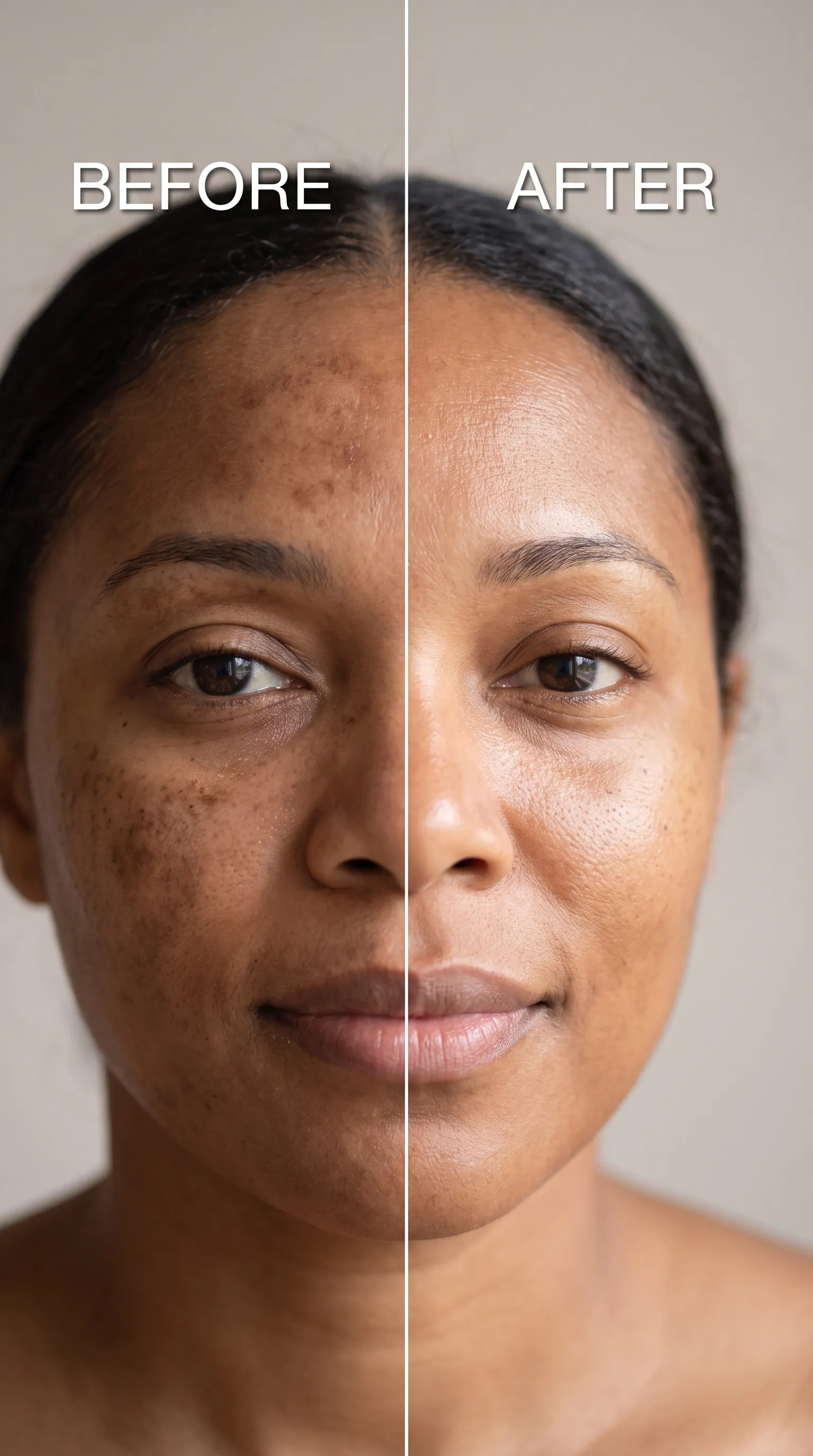
Dark spots have different causes and sit at different depths, so the best treatment only makes sense once you know which one is yours.
First-time client treatment
$249
- By appointment only
- Free parking
- Free cancellation up to 48 hours before
The best treatment for dark spots on face is a chemical peel when the pigment sits in the surface layer, a HydraFacial with a brightening booster when there is congestion as well as colour, and barrier repair first when the skin is inflamed. No treatment is right until the kind of mark has been identified, because the three main kinds respond in opposite ways.
Rated 5 out of 5 stars. — 42 five-star Google reviews
- Written by Kiki, licensed esthetician
- Last updated November 19, 2026
- 42 five-star Google reviews
- Prices published before a booking is made
A protocol built for the wrong one can leave the mark darker than it started.
If it has not, start with how to tell the three kinds apart, because that one decision changes everything that follows.
New pigment forms whenever skin is inflamed or exposed to unprotected light, which is why every entry below comes with the same daily instruction.
The ranking
Ranked for a dark spot on the face, in the order most people should reach for them. The reasoning for each is underneath.
1. LIRA chemical peel — for pigment in the surface layer
The strongest tool in the set for colour, because it works on the layer the pigment is in. Chemical peels use exfoliating acids to dissolve and lift away dull surface skin from the top down, accelerating cellular turnover so that pigmented cells are shed rather than left in place.
Inflammation is itself a pigment trigger, so a peel strong enough to be dramatic on some skin is strong enough to darken a mark on other skin.
2. HydraFacial with a brightening booster — for colour plus congestion
A HydraFacial cleanses, exfoliates, extracts and hydrates in one pass, which means it clears the congestion that is making a mark look darker than it is while delivering a targeted brightening booster. Extraction is what a peel cannot do.
It is also the gentlest option on the list. That makes it the one that works when the skin has been overworked, including skin that has already reacted to a strong peel somewhere else.
3. DMK enzyme therapy — for a compromised barrier
Acid on an inflamed barrier and needles on an inflamed barrier both make the same problem worse.
The honest answer at a first visit, for a lot of people, is that the first session is the one that makes the next session work.
4. Dermaplaning — for the surface, before anything else
On its own it does very little for the colour of a mark. What it does is give the treatment that follows it a clean surface to act on.
5. Procell microchanneling — for texture and scarring, not colour
If the mark sits alongside texture and scarring, it moves up the list.
What every option above has in common
A tinted broad-spectrum SPF 50+ with iron oxides blocks the visible light that ordinary sunscreen does not address. On the days it is not worn, the treatment is being undone.
Read which sunscreen actually works for dark spots before buying anything, and what each treatment costs before booking.
What clients actually mention after treatment
Barrier condition, dryness and sensitivity account for 7, and acne for 4.
If you are trying to work out whether a treatment treats your particular kind of mark, the reviews are the wrong place to look. The treatment pages are the right one.
For how the kind of mark is identified before anything is applied, see how treatments are selected for melanin-rich skin.
What it costs
The LIRA Gentle Renewal Peel is $199 and the Advanced Peel is $299. A HydraFacial is $259, DMK enzyme therapy Level 1 is $279, dermaplaning is $199 and Procell microchanneling is $475. A first visit is $249 and includes the consultation and skin analysis that decides which of these is right.
Every price is published on the treatment menu rather than quoted at the door, because comparing studios in San Diego is difficult when nobody lists a price.
Where this leaves a client
A first visit is $249 and includes the consultation and skin analysis that turns any of this into a plan for the skin.
Prices are published, the studio is appointment-only, and parking is free.
Written by Kiki, Licensed Esthetician, California Board of Barbering & Cosmetology, with 7+ years treating melanin-rich skin at KIAMO Skin in San Diego.
Common questions
Dark spot questions
What is the best cream for dark spots?
What is the number one dark spot remover?
Does vitamin C get rid of dark spots?
How do Koreans remove dark spots?
Rated 5 out of 5 stars. — 42 five-star Google reviews
“I've been going to KIAMO Skin for over a year and can't recommend it enough. Real, visible results.”
Also in the journal
Three kinds of dark mark, and why one facial cannot fix all three
Choosing a facial for hyperpigmentation before you know which kind you have is the most common reason treatment fails — and occasionally the reason it backfires.
June gloom is not sun protection
The marine layer is the single most expensive misunderstanding in San Diego skincare. It looks like cover. It is not cover.
San Diego hard water and your scalp
If your scalp flakes, itches, or feels coated no matter what shampoo you buy, the shampoo may not be the variable worth changing.
Microneedling on dark skin, and why depth decides the outcome
Not whether needling works on melanin-rich skin, but whether the depth was set correctly for the skin in front of the device.
Is dermaplaning safe for dark skin? Here is what actually matters.
The question is not really whether dermaplaning works on darker skin. It is whether the blade angle and pressure match the skin in front of it.
Professional Scalp Treatment San Diego: Keravive for Dandruff, Flaking & Hair Health
Professional scalp treatment in San Diego. Keravive for dandruff, seborrheic dermatitis, dry scalp and thinning, treating the cause rather than the symptom.
San Diego Scalp Treatments: How Does Keravive Work?
Keravive removes the buildup shampoo cannot reach. Here is what it does, and why San Diego water and sun make it necessary.
Hyperpigmentation Treatment Guide: What Actually Works for Dark Spots, Melasma & PIH
Stubborn dark spots, melasma or uneven tone in San Diego: what actually helps, and why it depends on your skin type.
How much does a chemical peel cost in San Diego?
The price of a chemical peel in San Diego varies by depth and formulation. The more important question is which one your skin needs.
Best chemical peel for melasma, and what the answer actually depends on
Best peel for melasma is a search query, not a clinical answer. Here is the peel your skin type can tolerate every four to six weeks.
Acne scars in San Diego: which ones a facial can fix and which need microneedling
Most of the time when a facial "didn't work" for acne scarring, the scar type was never the issue. The treatment was.
Dermaplaning or a chemical peel: which one actually changes your skin?
These two sound like competing versions of the same thing. One removes what is on top; the other changes what happens underneath.
Best sunscreen for dark spots in San Diego: what to look for on the label
Most sunscreen in San Diego is bought on brand and worn on habit. For a mark that keeps returning, the label matters more than the name.
Chemical peel or microchanneling: which one will clear your dark spots
These two work in opposite directions, one down from the surface and one up from beneath. Choosing wrongly can leave a mark darker.
Facial for sensitive skin: which modality suits a reactive barrier, and what each one costs
Sensitive skin is not a skin type, it is a condition — and the treatment that calms it can be the treatment that makes it worse.
How much does a facial cost in San Diego in 2026?
The published San Diego market rate for a facial spans a wide range. The gap between the two ends of it is not quality. It is what the price includes. First-time clients here start at $249.
How to fade dark spots at home, and the three things that make them darker
Most home routines for dark marks fail in the same three places, and none of them is the product. The order, the light protection, and what happens in the week after a spot clears.
How to prepare for a chemical peel, and the week before that does the most work
A peel is the treatment, but the week before it is what decides how the skin responds to it. On melanin-rich skin that difference is the difference between clearing pigment and making more of it.
How to get the most out of a HydraFacial, including what to do the day before
A HydraFacial is a maintenance treatment with a specific job. Doing the day before it right is a short list, and the routine between visits is what decides whether it holds.